Joshua Tree RV Camping: Length Limits and Alternatives
In this guide
- Campground limits, water and fees, 2026
- Site by site: what Recreation.gov actually lists
- Water, dumping and power
- Reservations, seasons and stay limits
- Getting around the park in a rig
- Alternatives for rigs over 35 feet, or when the park is full
- Which campground for which rig
- Mistakes to avoid
- When to go and how long
- Gear that helps at Joshua Tree
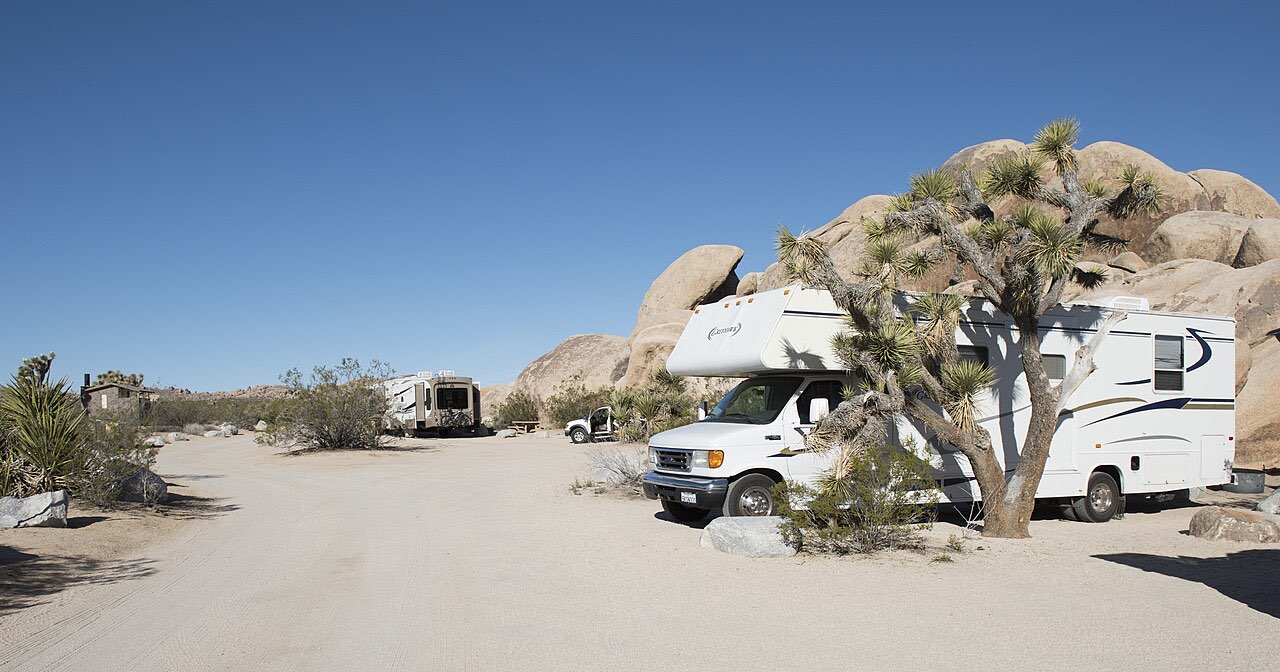
Joshua Tree is a 35-foot park with no hookups, and the 35 feet is combined length: motorhome plus toad, or truck plus trailer. Hidden Valley and White Tank drop to 25 feet combined. Only Black Rock and Cottonwood have water and a dump station (at $5 a use); the other seven campgrounds have no water, and generators are limited to six hours a day in three two-hour blocks. If your rig and tow together are under 35 feet and you can live on tanks and batteries for a few nights, the park has about 500 sites to choose from. If you are over 35 feet combined, you are camping outside the park and driving in.
The season flips the usual logic. October through May is the busy season, when the NPS says every campground fills on weekends; summer is the empty off-season because the interior runs past 100 degrees. Figures below are from the NPS campgrounds page, the camping regulations, the park’s campground data and Recreation.gov, read in October 2026. Confirm them before you book; the park raised fees in 2025 and the individual campground pages were last updated between 2021 and 2025.
Campground limits, water and fees, 2026
| Campground | Elevation | Sites | Combined RV limit | Water | Dump | Toilets | Fee | Booking |
|---|---|---|---|---|---|---|---|---|
| Black Rock (NW, Yucca Valley) | 4,000 ft | 99 | 35 ft | Yes | Yes, $5 | Flush | $35 | Reservation, year-round |
| Cottonwood (S, off I-10) | 3,000 ft | 62 + 3 group | 35 ft at some sites | Yes | Yes, $5 | Flush | $35 | Reservation, year-round; Loop B closes in summer |
| Indian Cove (N, off Hwy 62) | 3,200 ft | 101 + 13 group | 35 ft at some sites; group 25 ft | No (jug fill at ranger station 2 mi) | No | Pit | $35 | Reservation, year-round |
| Jumbo Rocks (center) | 4,380 ft | 124 | 35 ft at some sites; one site ~40 ft | No | No | Pit | $30 | Reservation, year-round |
| Ryan (center) | 4,400 ft | 31 + horse | 35 ft, “limited RV” | No | No | Pit | $30 | Reservation; closed in summer |
| Belle (center-east) | 3,800 ft | 18 | 35 ft at sites 2, 4, 6-8, 14-18; most 25-30 | No | No | Pit | $25 | First-come; closed in summer |
| Hidden Valley (center) | 4,200 ft | 44 | 25 ft | No | No | Pit | $25 | First-come, year-round |
| White Tank (center-east) | 3,800 ft | 15 | 25 ft | No | No | Pit | $25 | First-come; closed in summer |
| Sheep Pass (center) | 4,500 ft | 6 group | No RVs or habitable trailers | No | No | Pit | from $55 | Reservation |
Sources: NPS campgrounds page and campground data, Recreation.gov, October 2026. Senior and Access pass holders pay half the camping fee.
Three things to read out of that table. First, no hookups anywhere, and only two water points, both at the park’s edges; the central campgrounds, which have the scenery, are dry. Second, the 35 feet is combined, and the NPS counts a tow vehicle or towed car as a second vehicle against the two-vehicle site limit, so a truck-and-trailer pair uses both slots. Third, “some sites” is doing a lot of work in the NPS wording. The campground ceiling says nothing about the site you book, and Joshua Tree sites were laid out between boulders decades before 35-foot rigs were common.
Site by site: what Recreation.gov actually lists
Because the ceiling and the site diverge so much here, the Recreation.gov per-site data is the number that matters. In October 2026:
- Jumbo Rocks: of 124 sites, 27 list a 35-foot driveway, 20 list 24 feet, 44 list 20 feet and the rest are 12 to 18 feet. The park says site 84, at roughly 40 feet, is the longest. Seventy-four sites are tent-only.
- Black Rock: 43 sites take RVs, with 18 rated at 35 feet, 7 at 30, 9 at 28 and 7 at 25; the other 56 are tent-only. The NPS says plainly that not all sites can handle long RVs.
- Cottonwood: the most RV-friendly layout, with paved back-in driveways listed from 26 to 60 feet, but the permitted RV length on most of them is 28 to 30 feet because the pads are long and narrow. Six sites are designated RV sites.
- Indian Cove: 52 standard sites, 29 of them at 25 feet and 10 at 35.
Enter your true combined length in the Recreation.gov filter and believe the result. The park’s own rule is that if your RV is longer than the parking length you must move to another site, subject to availability and a change fee, and on a full winter weekend there is no other site. Our Recreation.gov guide for RVers covers how the filter treats combinations.
Water, dumping and power
Water is at Black Rock and Cottonwood only, both with RV-accessible fill. Indian Cove has a bottle-filling station at the ranger station two miles north of the campground, not an RV fill, and the NPS directs RVs to the fill at park headquarters in Twentynine Palms. Everyone staying at Jumbo Rocks, Ryan, Belle, Hidden Valley or White Tank arrives full and leaves when the tank is empty. In the dry desert air a couple uses 5 to 8 gallons a day with care, which makes a 40-gallon fresh tank good for four or five nights.
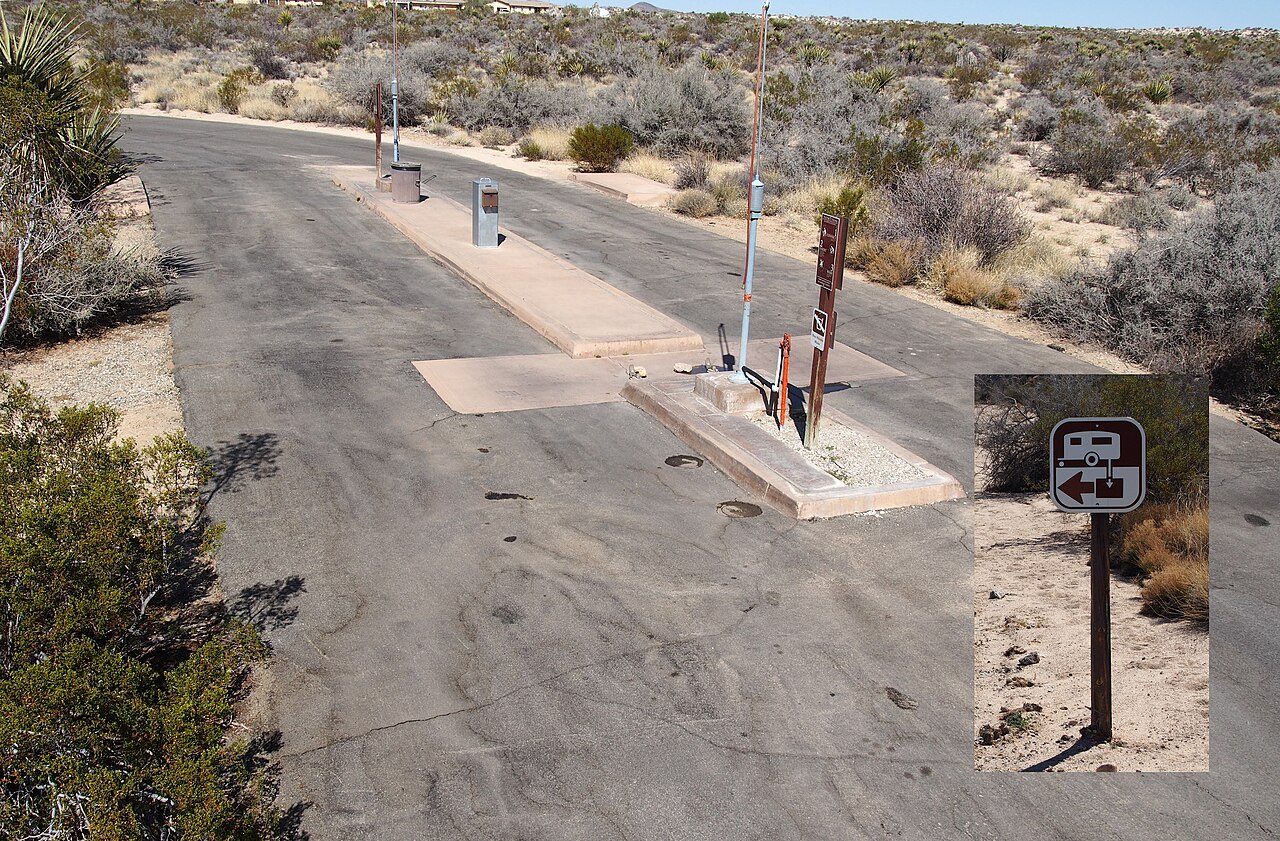
Dump stations are at Black Rock (near site 6) and Cottonwood (between the visitor center and the campground), $5 per use, paid at any entrance station. Whether that fee is waived for registered campers is not stated on the page, so budget it. They are the only legal dump points inside the park; the central campgrounds have none, and dumping grey water on the ground is a citation. The two stations are about 70 road miles apart via the park, so plan the dump for the end you exit from.
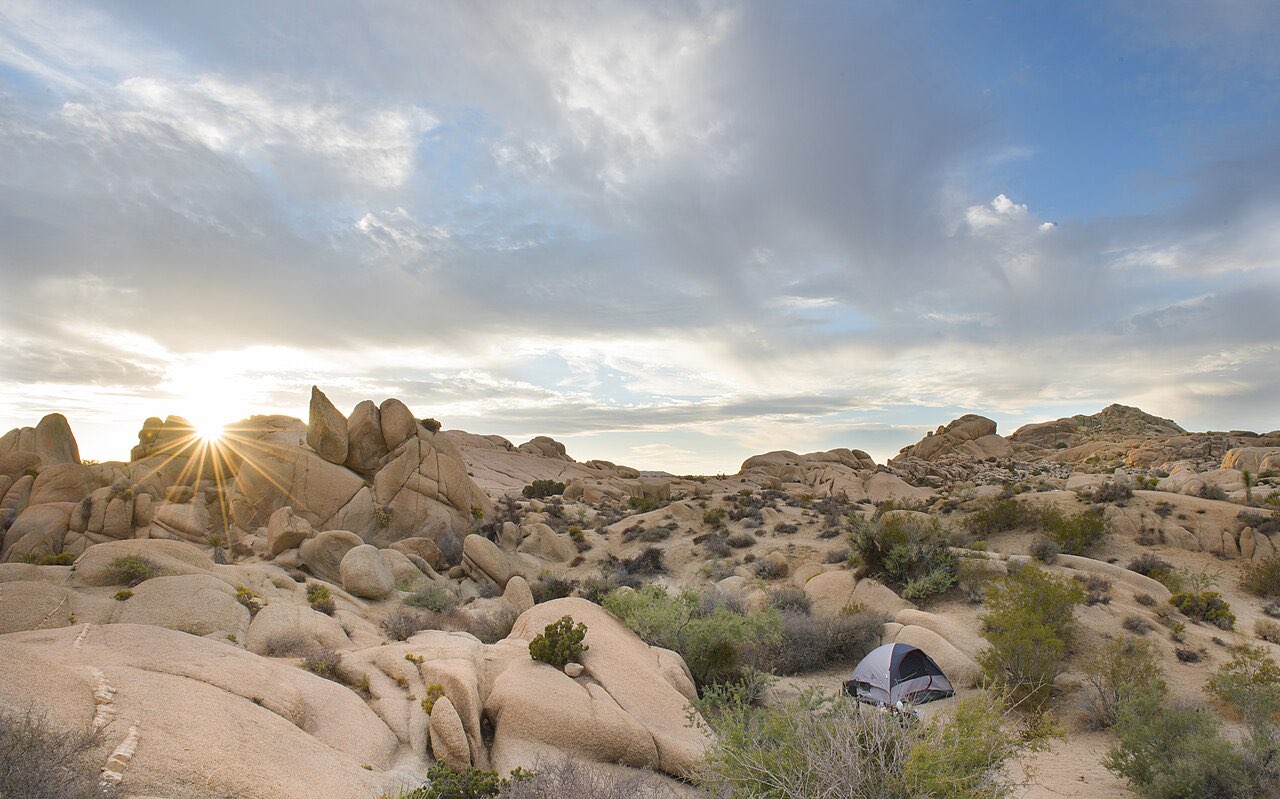
Generators run only 7 to 9 am, noon to 2 pm and 5 to 7 pm, and quiet hours are 10 pm to 6 am. Six hours of charging a day is enough to keep a lithium bank and a 12-volt fridge happy, and the park’s winter sun makes it an easy solar destination; nights in January drop into the 30s at Jumbo Rocks, so plan for furnace draw. Our sister site’s RV solar basics is a good primer if this is your first dry-camping park.
Reservations, seasons and stay limits
Six campgrounds take reservations year-round on Recreation.gov or 1-877-444-6777, up to six months ahead and as late as the same day: Black Rock, Cottonwood, Indian Cove, Jumbo Rocks, Ryan and Sheep Pass. Hidden Valley, Belle and White Tank are first-come: find an empty site, occupy it, then go to an entrance station and pay within an hour (payment can wait until morning if the stations are closed). Check-in is after noon at the reservation campgrounds and checkout is noon everywhere; a site left empty for 24 hours is treated as vacant.
The stay limit is 30 nights per calendar year in the park, of which only 14 may fall between October and May. That is a parkwide cap, not a per-campground one, and it is enforced through the reservation system.
Seasonally: Ryan, Belle and White Tank close for summer, Cottonwood’s Loop B typically closes and Loop A goes first-come, and some Black Rock sites close. Indian Cove limits reservable sites to 39 between Memorial Day and Labor Day. None of that matters much, because the NPS frames the whole park as an October-to-May destination with 70 to 90 degree days and 40 to 60 degree nights, and summer as an off-season of uncomfortable heat; Cottonwood at 3,000 feet is the hottest campground, Jumbo Rocks and Ryan at 4,400 feet the coolest.
Getting around the park in a rig
Park Boulevard and Pinto Basin Road, the two paved through-roads, have no posted RV restrictions and are two lanes with modest grades. The practical limits are parking: trailhead lots at Hidden Valley, Barker Dam, Keys View and Skull Rock are sized for cars and overflow onto the shoulder on winter weekends, and the NPS does not allow sleeping in a vehicle at roadside pull-offs. Keys View Road climbs to 5,185 feet with a lot at the top that a 30-foot motorhome can manage early in the day; Geology Tour Road and Queen Valley Road are dirt and not for RVs. Unhitch at camp or leave the trailer behind for the day. The entrance fee is $30 per vehicle for seven days; the America the Beautiful pass covers it and pays for itself if Death Valley is on the same trip.
Alternatives for rigs over 35 feet, or when the park is full
Winter weekends sell out, and nothing in the park fits a 40-foot coach, so most RV visits involve at least one night outside. The NPS maintains a camping outside the park page listing, without endorsement:
- North side (Hwy 62): Joshua Tree Lake RV & Campground, Joshua Tree RV & Campground, Desert Drifter RV Resort and Pioneertown Corrals near Joshua Tree and Yucca Valley; Twentynine Palms RV Resort; and two self-contained-only overnight spots with no hookups, Tortoise Rock Casino and the California Welcome Center in Yucca Valley.
- South side (I-10): Chiriaco Summit, the Palm Springs/Joshua Tree KOA, and Emerald Desert RV Resort toward Indio.
- BLM dispersed camping: the NPS describes a BLM area north of the park between the West and North entrances, surrounded by private land (use the map), and permitted sections south of the park. No restrooms, water or trash service; pack everything out; campfires need a BLM permit; no camping within 300 feet of a road or in posted closures. BLM’s general rule is 14 days, then move at least 25 miles. The south area, reached from the Cottonwood Springs Road exit of I-10 by Chiriaco Summit, is the one RVers know as “Joshua Tree South”; we could not find a dedicated BLM page for it, so treat the access road as unmaintained dirt and scout before committing a big rig.
The BLM options put you five to ten minutes from an entrance with a dump station at Cottonwood for $5. If that is a new style of camping, read our sister site’s boondocking for beginners first. Joshua Tree’s tight sites and dry camping are typical of the desert parks; our Death Valley RV guide is the natural comparison, and the parkwide national park RV size limits table puts the 25- and 35-foot figures alongside the rest.
Which campground for which rig
| Rig | Best fit | Why |
|---|---|---|
| Motorhome 30-35 ft with toad, or truck + trailer near 35 ft total | Black Rock (35-ft sites) or Cottonwood | Water and dump on site; flush toilets; the only places a full-size rig is comfortable |
| Class C or trailer, 25-30 ft combined | Jumbo Rocks 35-ft sites, Indian Cove, Belle, Ryan | The scenery campgrounds; arrive full, leave empty |
| Van, truck camper, teardrop under 25 ft | Hidden Valley, White Tank, any first-come | Cheapest, most flexible, best boulders |
| Anything over 35 ft combined | Outside: Twentynine Palms, Yucca Valley, Indio RV parks, or BLM south | Dump at Cottonwood for $5 on the way through |
| Summer visit | Black Rock or Cottonwood only | Water matters; the rest close or empty |
| Horse trailer | Black Rock or Ryan equestrian sites | Reservation required |
Mistakes to avoid
- Measuring the trailer alone. The limit is combined length, and the tow vehicle counts as a second vehicle at the site.
- Booking Jumbo Rocks on the campground ceiling. Forty-four of its sites are 20 feet. Filter by site.
- Arriving at the central campgrounds with half a tank. No water from Hidden Valley to Belle. Fill at Black Rock, Cottonwood or Twentynine Palms headquarters.
- Planning on a generator at night. Three two-hour blocks, none after 7 pm.
- Driving Geology Tour Road or Queen Valley Road. Dirt, washboard and no turnarounds for RVs.
- Treating summer as a quiet bargain. Three campgrounds close, Cottonwood hits 105, and the dry ones have no shade.
- Overstaying. Fourteen nights between October and May, parkwide, per year.
When to go and how long
November to March for cool days and cold, clear nights; October and April for warmth with fewer crowds; avoid summer in anything without a generator and a big air conditioner, and even then only at Black Rock or Cottonwood. Weekdays are far easier than weekends all winter. Three nights is a full visit: one at Black Rock to fill and settle, two at Jumbo Rocks or Indian Cove in the boulders, and the Cottonwood dump station on the way out to I-10. Book the six-month window the day it opens for any winter weekend or holiday week; otherwise set a same-day alert, since the park allows same-day reservations and cancellations reappear constantly.
Gear that helps at Joshua Tree
Picks for the conditions described above, from established brands; check each listing for current specs before you buy.
As an Amazon Associate we earn from qualifying purchases.
- VTOMAN Jump 600X portable power station: There are no hookups in the park, so battery power covers small loads between generator blocks.
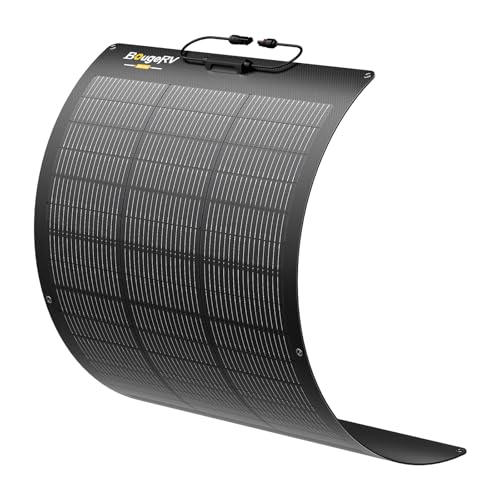 BougeRV Arch Pro 100W flexible solar panel: Desert sun makes a flexible panel productive at Jumbo Rocks, Ryan or White Tank.$169.99Price as of November 16, 2026, 9:59 AM ET. Prices and availability are accurate as of the date/time indicated and are subject to change.
 NOVUS 2300W inverter generator: For rigs that need more than battery power; an inverter generator keeps noise down in close-set desert sites.$319.99Price as of November 16, 2026, 9:59 AM ET. Prices and availability are accurate as of the date/time indicated and are subject to change.
Frequently asked questions
What is the RV length limit in Joshua Tree National Park?
Thirty-five feet combined length, including a towed vehicle or tow vehicle, at most campgrounds, and 25 feet combined at Hidden Valley and White Tank, per the NPS camping regulations in October 2026. Black Rock's page states a 35-foot maximum RV length. Those are campground ceilings; most individual sites are shorter. Jumbo Rocks, for example, has one site of roughly 40 feet, 27 sites listed at 35 feet and 44 sites at 20 feet on Recreation.gov.
Are there RV hookups in Joshua Tree?
No. The NPS states there are no hookups at any campground in the park. Black Rock and Cottonwood have RV-accessible potable water and dump stations; every other campground has no water at all. Generators may run only 7 to 9 am, noon to 2 pm and 5 to 7 pm, so you camp on batteries and tanks.
Where are the dump stations in Joshua Tree?
Two: at Black Rock Campground near site 6 in the northwest corner, and at Cottonwood between the visitor center and the campground in the south. The NPS charges $5 per use, payable at any entrance station, and both have water fill. There is also an RV water fill at park headquarters in Twentynine Palms. Nothing in the center of the park.
Which Joshua Tree campgrounds take reservations?
Black Rock, Cottonwood, Indian Cove, Jumbo Rocks, Ryan and the Sheep Pass group sites, all year-round on Recreation.gov up to six months ahead, same-day bookings allowed. Hidden Valley, Belle and White Tank are first-come, first-served, and Belle and White Tank close in summer. The park warns that every campground usually fills on weekends from October through May.
How much does camping cost in Joshua Tree?
In 2026, $35 a night at Black Rock, Cottonwood and Indian Cove, $30 at Jumbo Rocks and Ryan, $25 at Hidden Valley, Belle and White Tank, and from $55 for Sheep Pass group sites. Senior and Access pass holders pay half. The park entrance fee is $30 per vehicle for seven days, and the dump station is $5 per use.
Where can a big RV camp near Joshua Tree?
Outside the park. Anything over 35 feet combined has no legal in-park site. The NPS lists private RV parks in Yucca Valley, Joshua Tree, Twentynine Palms and Indio, plus Chiriaco Summit off I-10, and points to BLM dispersed-camping areas north and south of the park with no facilities, a 14-day limit and no camping within 300 feet of a road. The south BLM area off Cottonwood Springs Road near Chiriaco Summit is the one most RVers use.
Book an activity
Booked through GetYourGuide. We earn a commission if you book, at no extra cost to you — it never changes which option we recommend. How we work
Keep planning
- Acadia RV Camping Including Schoodic Woods
Acadia RV camping: Blackwoods and Seawall's 35-foot sites, Schoodic Woods' electric loop for rigs to 70 feet, Park Loop Road bridge heights and the Cadillac rule.
Updated Oct 2026 - Arches and Moab RV Camping: Where Rigs Actually Fit
Arches and Moab RV camping: Devils Garden's per-site limits up to 40 feet, no timed entry in 2026, $20 BLM campgrounds, Dead Horse Point hookups and where to dump.
Updated Oct 2026 - Assateague Island RV Camping: National vs State Park
Assateague Island RV camping: NPS Oceanside and Bayside sites vs the state park's 30-amp loops, the Virginia side's no-camping rule, fees and OSV closures.
Updated Oct 2026