Everglades RV Camping at Flamingo: Electric Sites, Season, Rules
In this guide
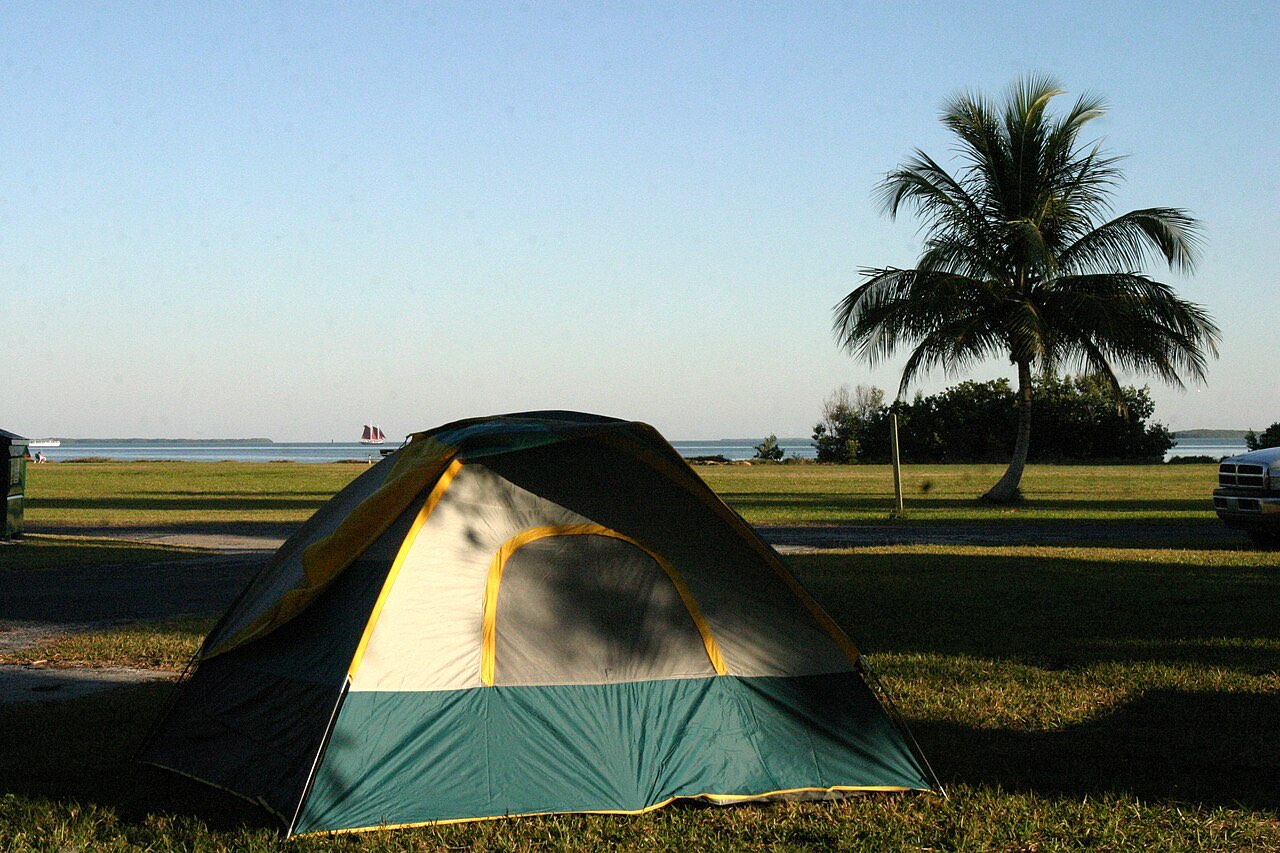
Flamingo is the only place to plug in an RV inside Everglades National Park, and it sits 38 miles down a dead-end road at the bottom of the Florida peninsula. The campground has 65 pull-through RV sites, 41 of them with electric hookups in the T-Loop, a 35-foot length limit, two dump stations and potable water, and in the 2026 fee schedule an electric site cost $50 to $60 a night. The park’s other campground, Long Pine Key, has no hookups, is six miles inside the main entrance, and is only open roughly November through April.
The decision is really about the season. From November to March, Flamingo is a fine winter base with ranger programs, boat tours and tolerable bugs; from May to October it is hot, stormy and mosquito-heavy, and only an electric site with working air conditioning makes it livable. Everything here is booked through the concessioner, Flamingo Adventures, not Recreation.gov. Figures come from the NPS campground listings, the park’s fees and directions pages, read in October 2026; confirm rates on the concessioner’s page before you book, because they change each season.
The two campgrounds at a glance
| Flamingo | Long Pine Key | |
|---|---|---|
| Location | End of the Main Park Road, 38 miles from the Homestead entrance, on Florida Bay | 6 miles inside the Homestead entrance, in the pinelands |
| Sites | 274: 234 drive-in (55 with a bay view), 40 walk-up, 3 group | 108 plus 1 group |
| RV sites | 65, all large pull-throughs | RVs allowed on standard sites |
| Electric | 41 sites, T-Loop | None |
| Max RV length | 35 ft | 35 ft |
| Water / sewer at site | No | No |
| Dump station | Yes, two, year-round | Yes, year-round |
| Showers | Solar-heated, year-round | Hot, year-round |
| Toilets | Flush | Flush |
| 2026 fee, non-electric | $33 Mon-Thu / $38.50 Fri-Sun | $33 / $38.50 |
| 2026 fee, electric | $50 Mon-Thu / $60 Fri-Sun | n/a |
| Season | Year-round | About November to April |
| Generators | 8 am to 8 pm | 8 am to 8 pm |
| Booking | Flamingo Adventures, flamingoeverglades.com, 1-855-708-2207 | Same |
Source: NPS campground data for Everglades, October 2026.
There are no other front-country campgrounds anywhere in the park. Shark Valley and the Gulf Coast (Everglades City) have no camping; the nearest public RV sites in that direction are the Big Cypress National Preserve campgrounds along US 41, which are a different unit with their own rules.
Flamingo: electric sites, length and the T-Loop
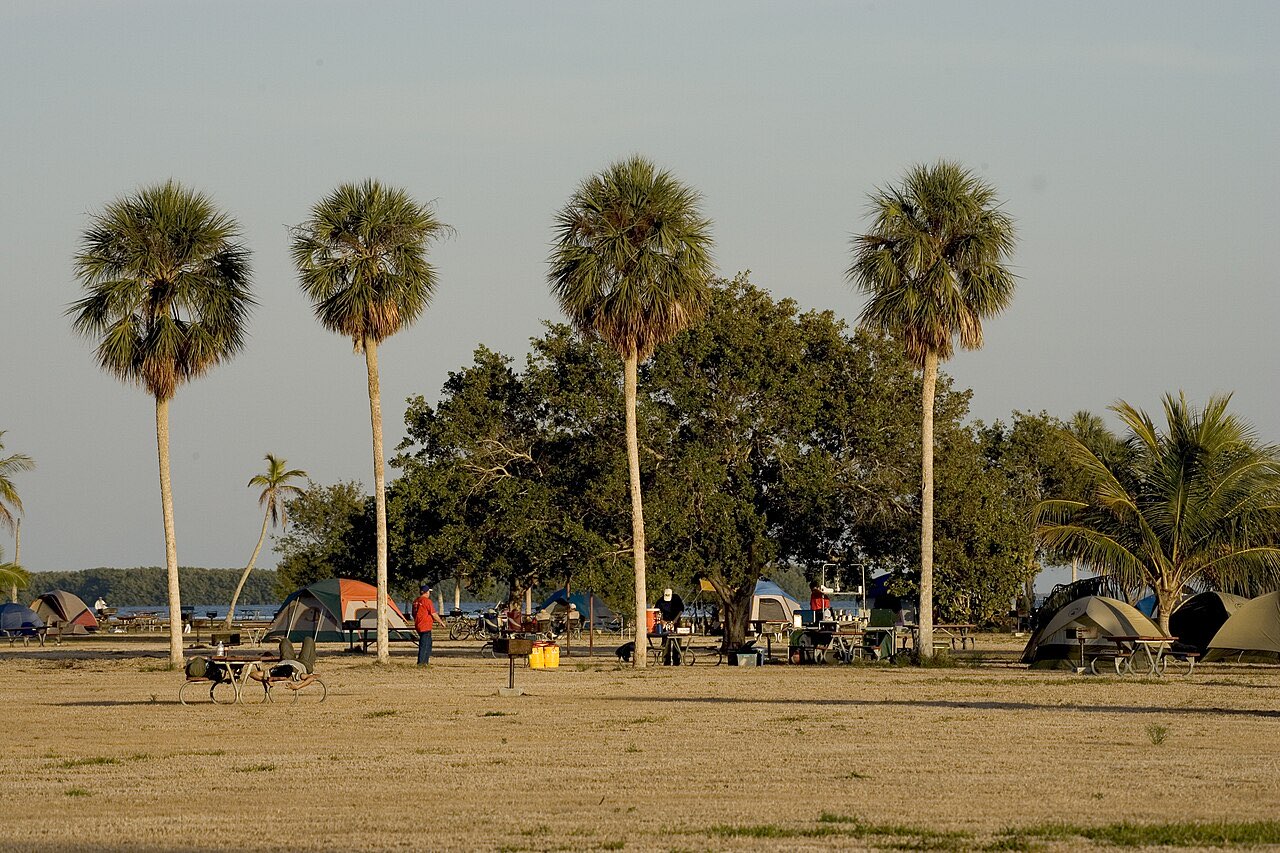
The NPS describes Flamingo’s RV sites as “all the large pull-through type,” which is unusual for a national park and means a 35-foot motorhome with a toad can usually stay hitched. The 41 electric sites are grouped in the T-Loop. We could not find an official amperage figure for them; third-party listings describe 20, 30 and 40 amp outlets, so pack adapters and do not count on a 50-amp receptacle. Electric sites have no water or sewer, so the routine is fill at the potable water point on arrival, run off the fresh tank, and use one of the two dump stations on departure. If dump stations are new to you, our sister site walks through it in how to use an RV dump station.
The 35-foot limit is the campground figure; the NPS site data does not list individual pad lengths the way Recreation.gov does, so you cannot filter by site. The same data flags trailers as not permitted at Flamingo’s RV sites. We did not find that rule written out on an NPS page, and travel trailers have historically camped at Flamingo, so treat it as a question for the booking agent rather than a settled fact.
Flamingo has flush toilets, solar-heated showers (lukewarm on a cloudy day), picnic tables, grills and an amphitheater with ranger programs in the dry season. The marina, store, boat tours, kayak rentals, lodge rooms and eco-tents are run by the same concessioner next to the visitor center. There is no fuel at Flamingo; the last fuel is in Florida City and Homestead before the entrance, 38 miles back.
Rules that matter for RVs
- One RV plus one tent, or two tents, per site; 8 people and 2 vehicles. Do not park on the grass.
- Checkout at noon. Campground speed limit 15 mph.
- Generators 8 am to 8 pm only; quiet hours 10 pm to 6 am.
- Fires in grills only, and never unattended.
- All food and cooking gear sealed in the vehicle or a hard-sided unit when not in use; vultures, raccoons and crocodiles are all present, and the park warns that vultures damage rubber on parked vehicles at Flamingo (tarps are lent out at the visitor center in season).
- Pets on a 6-foot leash, in the campground and parking lots only; no trails.
Long Pine Key: the quieter non-electric option
Long Pine Key is the campground most people drive past. It is a few minutes inside the entrance at the end of a short spur, with 108 sites around a small lake in slash-pine forest, a year-round dump station, potable water, hot showers and flush toilets, and no electricity anywhere. The NPS lists a 35-foot RV limit and requires rigs to park on the paved pad. It is open seasonally, roughly November through April (the park’s data says April in one place and May in another; assume April and check), and closed through the wet season.
For an RV that can run without shore power it has real advantages: it is an hour closer to Homestead for groceries and fuel, the pinelands are drier and breezier than the bayside, and it is a short drive to the Royal Palm trails (Anhinga Trail, Gumbo Limbo) that most first-time visitors come for. Rates are the non-electric Flamingo rates, $33 Monday to Thursday and $38.50 Friday to Sunday in 2026. Register by 10 am on arrival day; the generator and quiet-hour rules are the same as Flamingo’s.
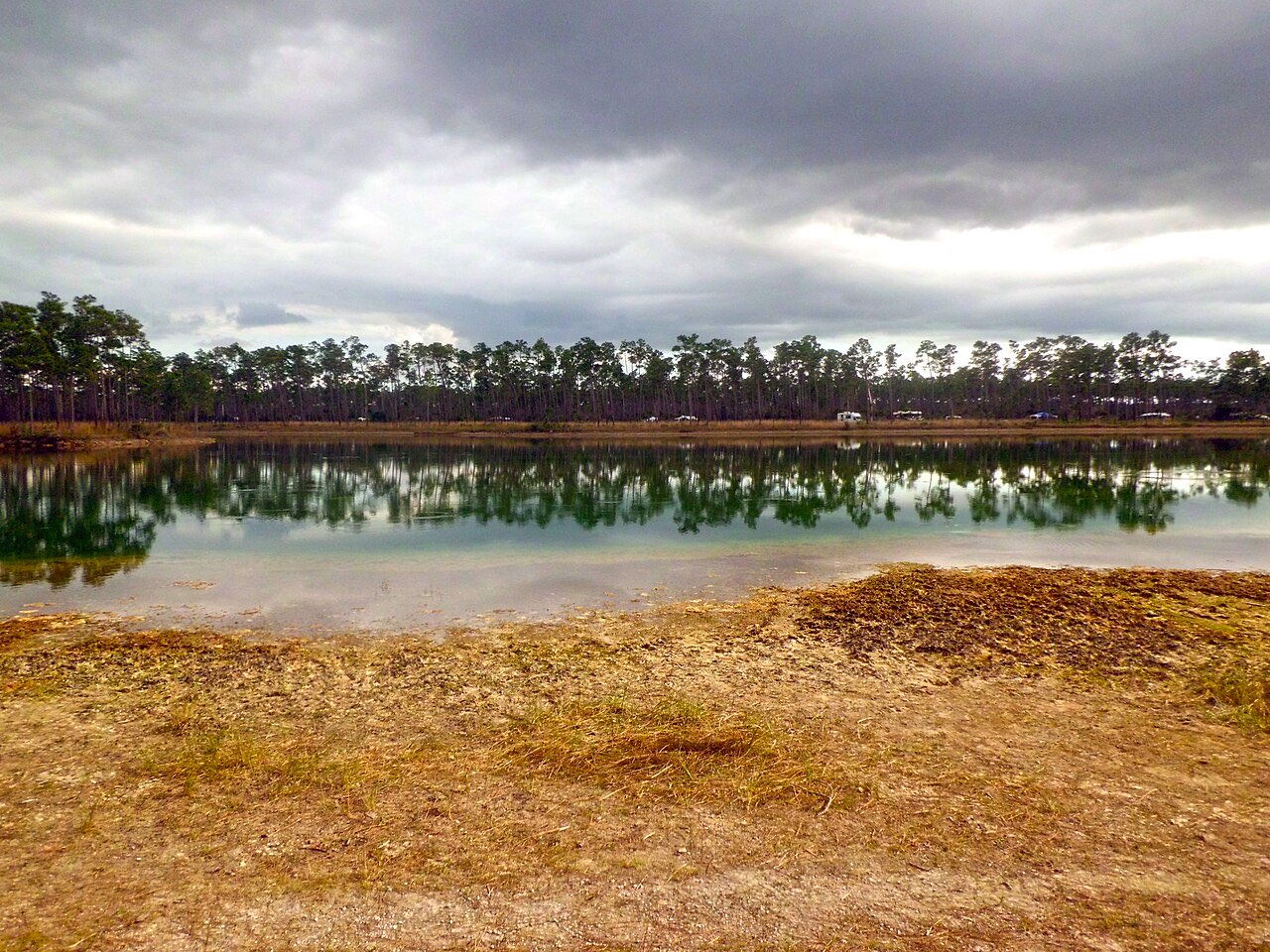
Booking through Flamingo Adventures
Neither campground is on Recreation.gov. The NPS directs all reservations to Everglades Guest Services, trading as Flamingo Adventures, at flamingoeverglades.com or 1-855-708-2207. The NPS summary of the system, as of October 2026:
- December to April: reservations “highly recommended.” Electric T-Loop sites and the bay-view sites go first, and holiday weeks sell out months ahead.
- June to November: reservations not needed; sites are available on arrival.
- Long Pine Key takes reservations for RVs and tents in its season and also holds first-come sites.
The concessioner’s site uses a third-party booking engine, so expect to create an account. Note that this is a concession booking, with its own cancellation terms, not the standard Recreation.gov policy; our Recreation.gov guide explains which parks use which system. Flamingo Adventures also sells the lodge rooms and eco-tents on the same page, which is useful if one night of the trip is better spent out of the rig.
Camping does not include park entry. The entrance fee was $35 per vehicle for seven days in 2026, $70 for a park annual pass, and the Everglades is one of the parks that adds a $100 per-person surcharge for non-US residents aged 16 and over unless they hold an annual or America the Beautiful pass.
Getting a rig to Flamingo
From Miami, take the Florida Turnpike (Route 821) south until it ends in Florida City, turn right at the first light onto Palm Drive (SR 9336) and follow the signs about 10 miles to the Ernest F. Coe Visitor Center and the entrance station. From there the Main Park Road runs 38 miles to Flamingo, paved, two lanes, posted 45 to 55 mph, with narrow shoulders and a handful of pull-offs. It is flat and straightforward for any RV; the hazards are wildlife on the road (the park asks drivers to slow for turtles, snakes and alligators, especially at night), tour traffic at the Royal Palm turnoff, and summer squalls that drop visibility to nothing.
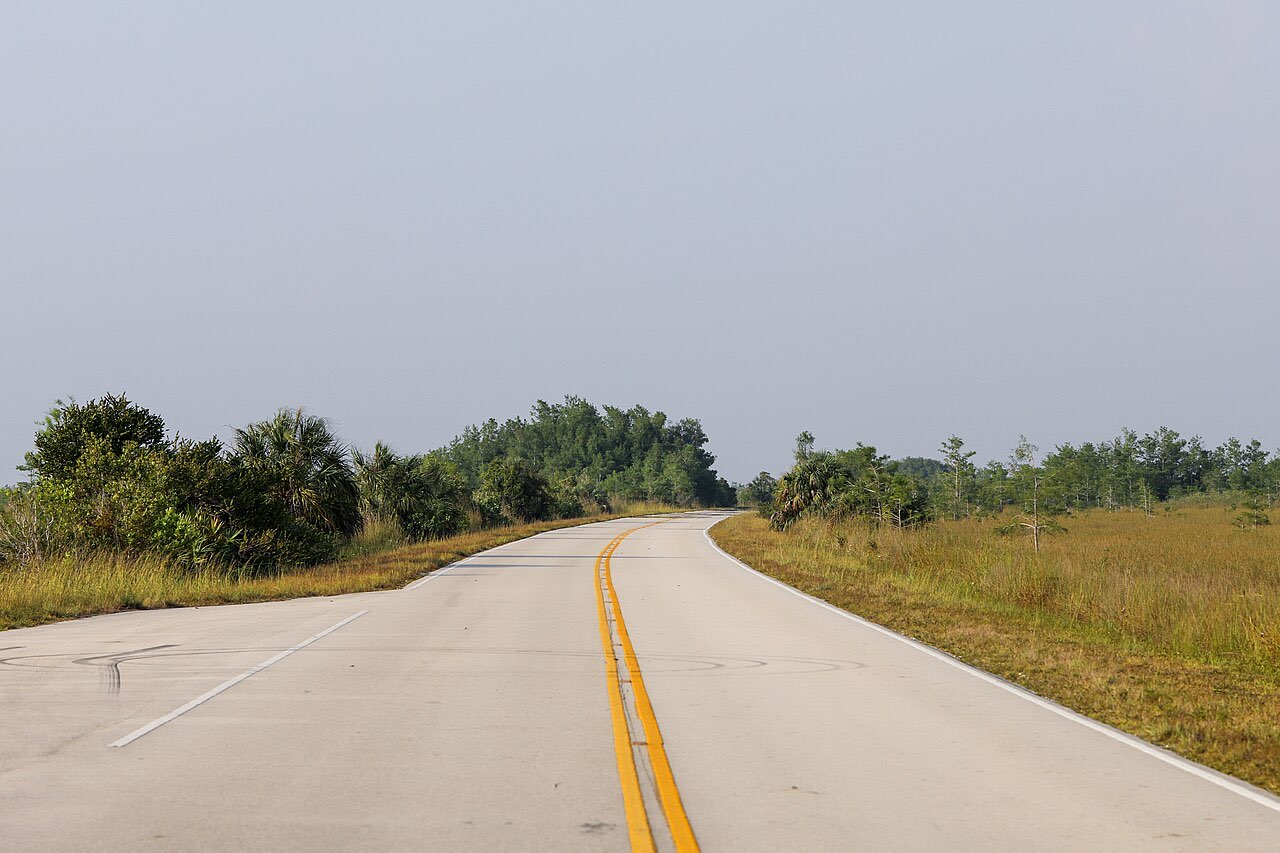
Every stop along the way (Royal Palm, Long Pine Key, Pa-hay-okee, Mahogany Hammock, Nine Mile Pond, West Lake) has a paved lot, and most have room to swing a 35-foot rig at off-peak times. On winter weekends the park says the Homestead entrance and Royal Palm lot are congested by mid-morning and recommends arriving before 10 am. There is no public transport inside the park beyond a seasonal Homestead trolley, so the rig or a towed car is how you get around. Fill the fresh tank and the fuel tank in Homestead; there is water at both campgrounds but nothing else for 38 miles.
Seasons, mosquitoes and storms
The NPS splits the year into a dry season, November through March, and a wet season, April through October. That split drives everything about camping here:
- November to March: the reason to come. Highs in the 70s, low humidity, wading birds concentrated at the shrinking ponds, manatees and crocodiles at the Flamingo marina, full ranger programming, Long Pine Key open. Mosquitoes are present but manageable. This is also when both campgrounds fill, so book.
- April and May: warming fast, bugs building, Long Pine Key closing. Still workable in an air-conditioned rig on a T-Loop site.
- June to October: daily thunderstorms, highs in the 90s, mosquitoes at their worst on the bayside, and hurricane season (June 1 to November 30, peaking August to October). Flamingo stays open and is nearly empty, but a non-electric site means a generator until 8 pm and then a hot, still night. The park’s own mosquito guidance was not reachable when we checked, so we will say only what the season dates imply: come prepared or come in winter.
Flamingo’s buildings were rebuilt after the 2005 and 2017 hurricanes, and a tropical system can close the Main Park Road and the campground on a day’s notice. If you are there between August and October, keep the rig fueled, tanks manageable and an eye on the National Hurricane Center.
Mistakes to avoid
- Searching Recreation.gov for Flamingo. It is not there. Book with Flamingo Adventures.
- Booking a non-electric site in summer. The 8 pm generator cutoff plus 85-degree nights is the most common regret in the campground reviews.
- Arriving at Long Pine Key in June. It is closed in the wet season; Flamingo is 32 miles further.
- Parking on the grass or leaving food out. Both are specific campground rules; vultures and raccoons enforce the second one.
- Assuming a 50-amp hookup. No official amperage is published; bring 30-amp and 15/20-amp adapters.
- Skipping the Homestead fuel stop. Nothing on the 38-mile road, and nothing at Flamingo.
- Forgetting the non-resident surcharge. $100 per adult on top of the $35 vehicle fee unless you hold a qualifying pass.
When to go and how long
December to March, booked a few months out for the T-Loop. Three nights at Flamingo covers a boat tour or paddle on Florida Bay, the Flamingo trails and a sunset at Eco Pond; add two nights at Long Pine Key (or do them first) for the Royal Palm trails and Pa-hay-okee without the 76-mile round trip each day. Everglades is flat, slow and warm, which makes it a good first winter trip for a new rig before tackling a mountain park. Hookups are scarce across the national park system, so Flamingo’s 41 electric sites are worth knowing about; our list of national park campgrounds with hookups puts it alongside the handful of others. If you are heading on to the Gulf side or the Keys, note that Big Bend and Death Valley, the other big “winter” parks, are covered in our Big Bend and Death Valley RV guides.
Gear that helps at Flamingo
Picks for the conditions described above, from established brands; check each listing for current specs before you buy.
As an Amazon Associate we earn from qualifying purchases.
 RVRVHOMM 30 amp RV surge protector: For the T-Loop electric sites; Florida summer storms bring lightning and power fluctuations.$47.99Price as of November 16, 2026, 9:59 AM ET. Prices and availability are accurate as of the date/time indicated and are subject to change.
 Camco TastePURE RV inline water filter: Electric sites have no water, so you fill at the potable water point; an inline filter on that fill is worth it.$20.82Price as of November 16, 2026, 9:59 AM ET. Prices and availability are accurate as of the date/time indicated and are subject to change.
- VTOMAN Jump 600X portable power station: For the non-electric loops, to run a fan and charge devices without a generator.
Frequently asked questions
Does Flamingo Campground have RV hookups?
Electric only. The National Park Service lists 65 RV sites at Flamingo, all large pull-throughs, of which 41 in the T-Loop have electrical hookups. There is no water or sewer at any site. Potable water and two dump stations are in the campground, so you fill before parking and dump on the way out. Long Pine Key, the park's other campground, has no electric sites at all.
How much does RV camping at Flamingo cost?
In the NPS fee listing read in October 2026, an electric RV site at Flamingo was $50 a night Monday to Thursday and $60 Friday to Sunday; a tent or non-electric RV site was $33 and $38.50. Long Pine Key non-electric sites were the same $33 and $38.50. Camping does not include the $35 seven-day park entrance fee. Rates are set by the concessioner, Flamingo Adventures, so confirm on their booking page.
What is the maximum RV length at Flamingo and Long Pine Key?
Thirty-five feet at both, according to the NPS campground data. The park's data also flags trailers as not permitted at Flamingo's RV sites, though we could not find that stated in plain language on an NPS page; if you tow, ask Flamingo Adventures when you book rather than assuming.
How do I reserve a campsite in Everglades National Park?
Through the concessioner, not Recreation.gov. Flamingo and Long Pine Key are run by Flamingo Adventures (Everglades Guest Services); book at flamingoeverglades.com or by calling 1-855-708-2207. The NPS says reservations are highly recommended for the December to April busy season and not needed from June to November. Long Pine Key is closed from about May through October.
When is the best time to RV camp in the Everglades?
The dry season, November through March, which is when the mosquitoes ease, the weather is mild, ranger programs run and Long Pine Key is open. April into May is a shoulder period with rising heat and bugs. The wet season, roughly April through October, brings heat, daily storms, heavy mosquitoes and hurricane risk; Flamingo stays open but it is a hard place to enjoy without air conditioning on an electric site.
Can I run a generator at Flamingo Campground?
Yes, from 8 am to 8 pm only, at both Flamingo and Long Pine Key, with quiet hours from 10 pm to 6 am. That makes a non-electric site a hot night in anything but winter, which is why the 41 electric T-Loop sites sell out first.
Book an activity
Booked through GetYourGuide. We earn a commission if you book, at no extra cost to you — it never changes which option we recommend. How we work
Keep planning
- Acadia RV Camping Including Schoodic Woods
Acadia RV camping: Blackwoods and Seawall's 35-foot sites, Schoodic Woods' electric loop for rigs to 70 feet, Park Loop Road bridge heights and the Cadillac rule.
Updated Oct 2026 - Arches and Moab RV Camping: Where Rigs Actually Fit
Arches and Moab RV camping: Devils Garden's per-site limits up to 40 feet, no timed entry in 2026, $20 BLM campgrounds, Dead Horse Point hookups and where to dump.
Updated Oct 2026 - Assateague Island RV Camping: National vs State Park
Assateague Island RV camping: NPS Oceanside and Bayside sites vs the state park's 30-amp loops, the Virginia side's no-camping rule, fees and OSV closures.
Updated Oct 2026