Glacier National Park RV Size Limits on Going-to-the-Sun Road
In this guide
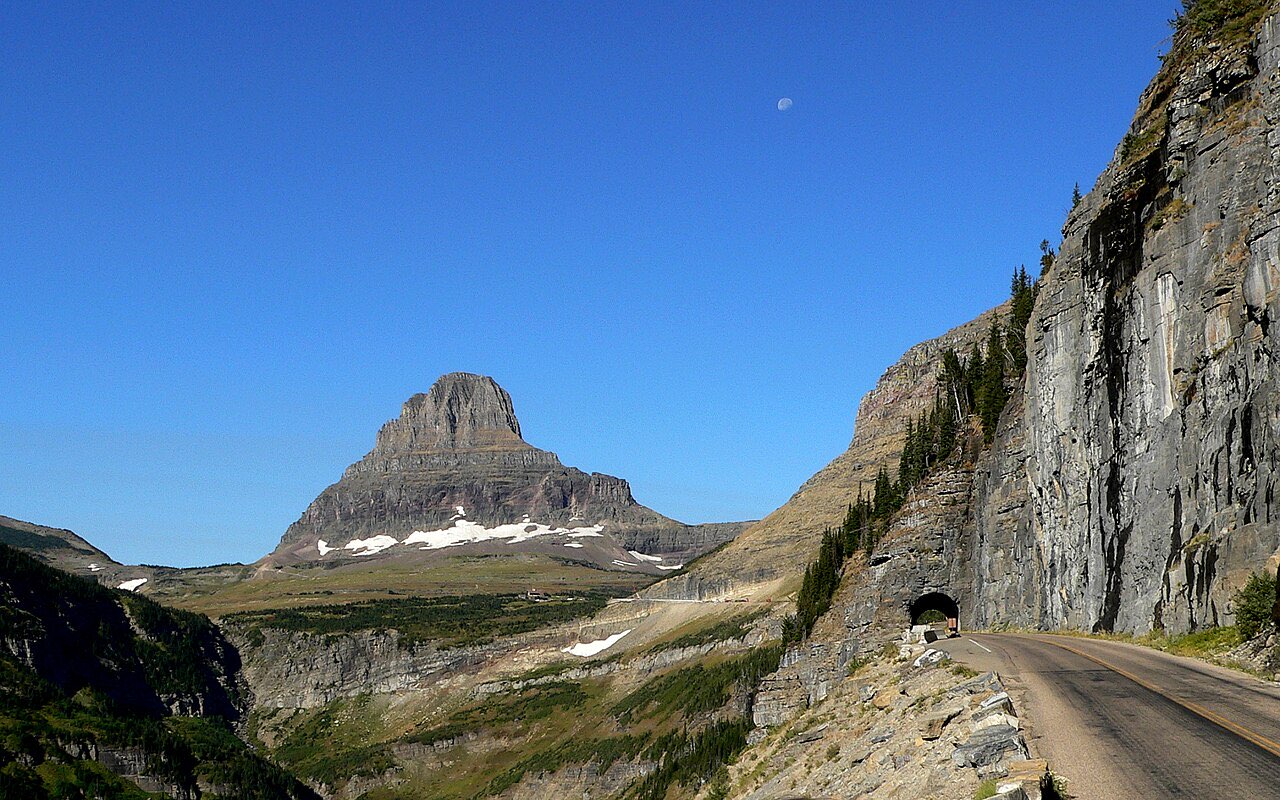
The rule on Going-to-the-Sun Road is the tightest in the national park system: nothing longer than 21 feet including bumpers, or wider than 8 feet including mirrors, between Avalanche Creek and Rising Sun. The NPS also posts a 10-foot height figure and warns that taller vehicles can have trouble with the rock overhangs heading west from Logan Pass to The Loop. That excludes every Class A and Class C, every travel trailer and fifth wheel, and most Class B vans once you add the mirrors.
The alpine section is the only part of the park with a size limit. Both ends of the road, West Glacier to Avalanche and St. Mary to Rising Sun, take any legal vehicle, and the roads to Many Glacier and Two Medicine have no posted size restriction. So the RV plan for Glacier is to camp low, in a campground whose pads fit your rig, and go over the pass by shuttle, tow vehicle or rental car. This guide gives the exact limits and where they apply, the per-campground site lengths from the NPS camping information page, the 2026 Logan Pass parking and shuttle rules, and how to time a visit around a road that may not open until late June. Sources are the NPS Going-to-the-Sun Road information page, the NPS camping information page, the park’s 2026 Logan Pass page and Recreation.gov, read in October 2026.
The limit and exactly where it applies
| Figure (NPS) | How it is measured | |
|---|---|---|
| Length | 21 ft (6.4 m) | Vehicle or vehicle combination, including bumpers |
| Width | 8 ft (2.4 m) | Including mirrors |
| Height | 10 ft (3 m) | Posted; the NPS describes it as a difficulty, not a prohibition, for the Logan Pass-to-The Loop stretch westbound |
| Where | Between Avalanche Creek and Rising Sun | Recreation.gov campground pages word it as between the Avalanche Campground area and the Sun Point parking area or Rising Sun picnic area; the alpine section either way |
The NPS release announcing the road’s full opening on June 22, 2026 used identical wording, so the rule has not changed. The sections not covered:
- West side: West Glacier entrance, Apgar, the length of Lake McDonald, Lake McDonald Lodge, Sprague Creek and Avalanche. Any rig that fits a campsite can drive this far.
- East side: St. Mary entrance to Rising Sun, about six miles.
- Elsewhere in the park: the Many Glacier road from Babb, the Two Medicine road from East Glacier, and US-2 around the south boundary between West Glacier and East Glacier carry no NPS size restriction. US-2 is the route a big rig takes to get from one side of the park to the other, about 1.5 to 2 hours.
Why 21 feet and 8 feet: the alpine section is a 1930s two-lane road with stone guard walls, overhanging rock at several points, tunnels cut through the mountainside and tight curves where a long vehicle cannot stay in its lane. Even vehicles that meet the limit must fold in mirrors at some points and will scrape the uphill wall if they drift.
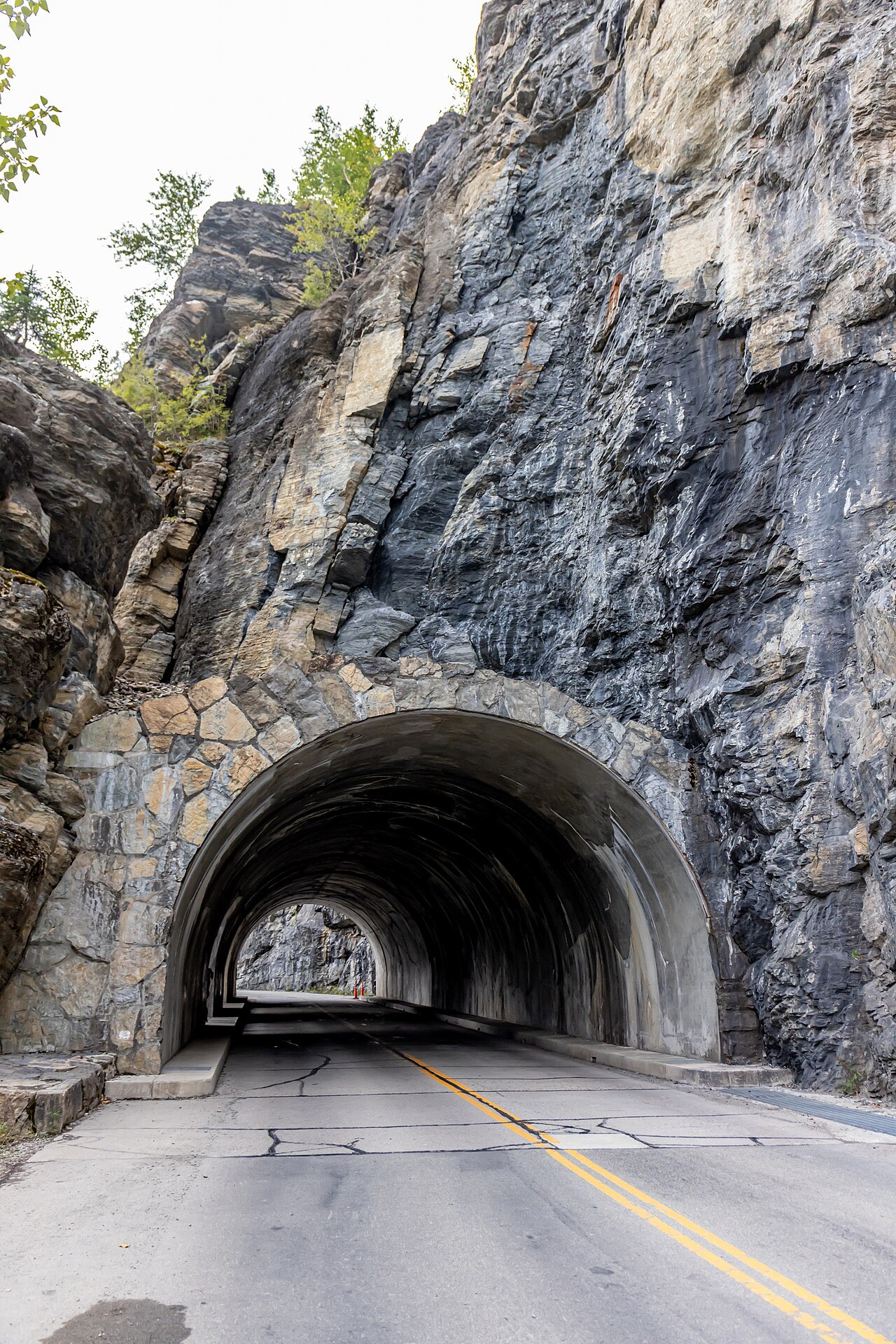
Does your rig qualify?
Almost certainly not, if it is anything other than a van or a small truck camper. Measure before you argue with the sign:
- Class B vans: many are 19 to 22 feet long and 6 ft 8 in to 7 ft 4 in wide at the body. The mirrors add 10 to 16 inches a side. A Sprinter 144 is under 20 feet and about 7 ft 10 in to 8 ft 4 in mirror to mirror depending on the mirrors fitted; a 170 wheelbase is over 22 feet. Measure yours.
- Truck campers: a crew-cab short-bed pickup is 19 to 20 feet, and a camper that overhangs the tailgate pushes it past 21. Width with towing mirrors is usually over 8 feet; with standard mirrors it is close. Height with the camper is 10 to 12 feet, into the advisory zone.
- Anything towing anything: the 21 feet applies to the combination. A car pulling a teardrop can qualify; a pickup pulling a 16-foot trailer cannot.
- Class C, Class A, travel trailer, fifth wheel: over on length and width. No exceptions, no permit, no escort.
If you are under the limit, you still need somewhere to park at the top. In 2026 that came with a clock.
Logan Pass in 2026: no vehicle reservation, a three-hour clock, a ticketed shuttle
The NPS states that vehicle reservations are not required in 2026 anywhere in the park, ending the timed-entry system of previous summers. In its place the park ran a pilot at Logan Pass from July 1 to September 7, 2026:
- Three-hour parking limit for private vehicles, enforced 24 hours a day, with a free time-stamped permit from a kiosk displayed on the dash. No overnight parking except for backcountry permit holders and Granite Park Chalet guests.
- A ticket-only Logan Pass shuttle boarding at Apgar Visitor Center, Lake McDonald Lodge, St. Mary Visitor Center and Rising Sun picnic area. Tickets were sold only on Recreation.gov, not in the park, for a $1 non-refundable processing fee per person; children two and over needed their own ticket. A 60-day rolling window opened May 2, 2026 at 8 am Mountain, with remaining tickets released at 7 pm the day before from June 30. The shuttle did not serve Avalanche Lake or Trail of the Cedars and did not run past Labor Day.
For an RVer this is good news: no entry reservation to chase, and a shuttle that leaves from the two campgrounds most big rigs use, Apgar and St. Mary. The 2027 arrangements had not been published as of October 2026; the park’s vehicle reservations page is where the announcement will land, usually in February. Timed entry at other parks is covered in the general national park timed entry guide.
Campgrounds: how many sites fit which length
Glacier publishes site counts by length rather than a single campground maximum, which is unusually useful. From the NPS camping information page, October 2026:
| Campground | Side | Sites by length | Dump station (Recreation.gov) | Generators | Booking |
|---|---|---|---|---|---|
| Apgar | West | 25 sites up to 40 ft; 194 sites total | Yes | 8-10, 12-2, 5-7 | Reservation; most sites 6 months out, some 4 days |
| Fish Creek | West | 18 sites up to 35 ft, 62 up to 27 ft; 178 total | Yes | Same hours; none in Loop C | Reservation |
| Sprague Creek | West | Nothing over 21 ft | Not listed | None at any time | Reservation |
| Avalanche | West | 50 sites up to 26 ft | Not listed | Same hours | Reservation |
| St. Mary | East | 3 sites up to 40 ft, 22 up to 35 ft | Yes | Loops B and C only | Reservation; day-of window Aug 17 - Sep 11 |
| Rising Sun | East | 10 sites fit 21 ft; nothing over 21 ft | Yes | None in sites 49-84 | Listed as first-come on one NPS page and reservation on another; check |
| Many Glacier | East | 13 sites up to 35 ft (NPS); Recreation.gov says most pads take no towed unit over 21 ft, a few 26-30 ft | Yes, at entrance | None in sites 48-59, 71, 86-102 | Reservation |
| Two Medicine | East | 10 sites up to 35 ft | Not listed | None in sites 1-36 | Reservation |
| Bowman Lake, Kintla Lake, Logging Creek, Quartz Creek | North Fork | Nothing over 21 ft; unpaved access roads | No | Cut Bank: none | First-come, first-served |
| Cut Bank | East | Nothing over 21 ft | No | None | First-come; Scan and Pay via the Recreation.gov app |
Fees: the NPS gives a summer range of $15 to $30 per night rather than a per-campground figure; hiker-biker sites are $8 per person; no refunds. Maximum stay is 14 days from July 1 to Labor Day and 30 days otherwise. Quiet hours are 10 pm to 6 am, eight people and two vehicles per site, check-out at noon. Shared water spigots and flush toilets are seasonal; there are no hookups anywhere in the park.
Practical reading: a rig up to 40 feet has 28 sites in the whole park (25 at Apgar, 3 at St. Mary). A 35-footer adds Fish Creek’s 18, St. Mary’s 22, Many Glacier’s 13 and Two Medicine’s 10. Everything else is a 26-foot-and-under campground. If you are over 40 feet, or want hookups, you are camping in West Glacier, Columbia Falls, St. Mary or Babb and driving in. The hookups-in-national-parks list shows how unusual Glacier’s zero is.
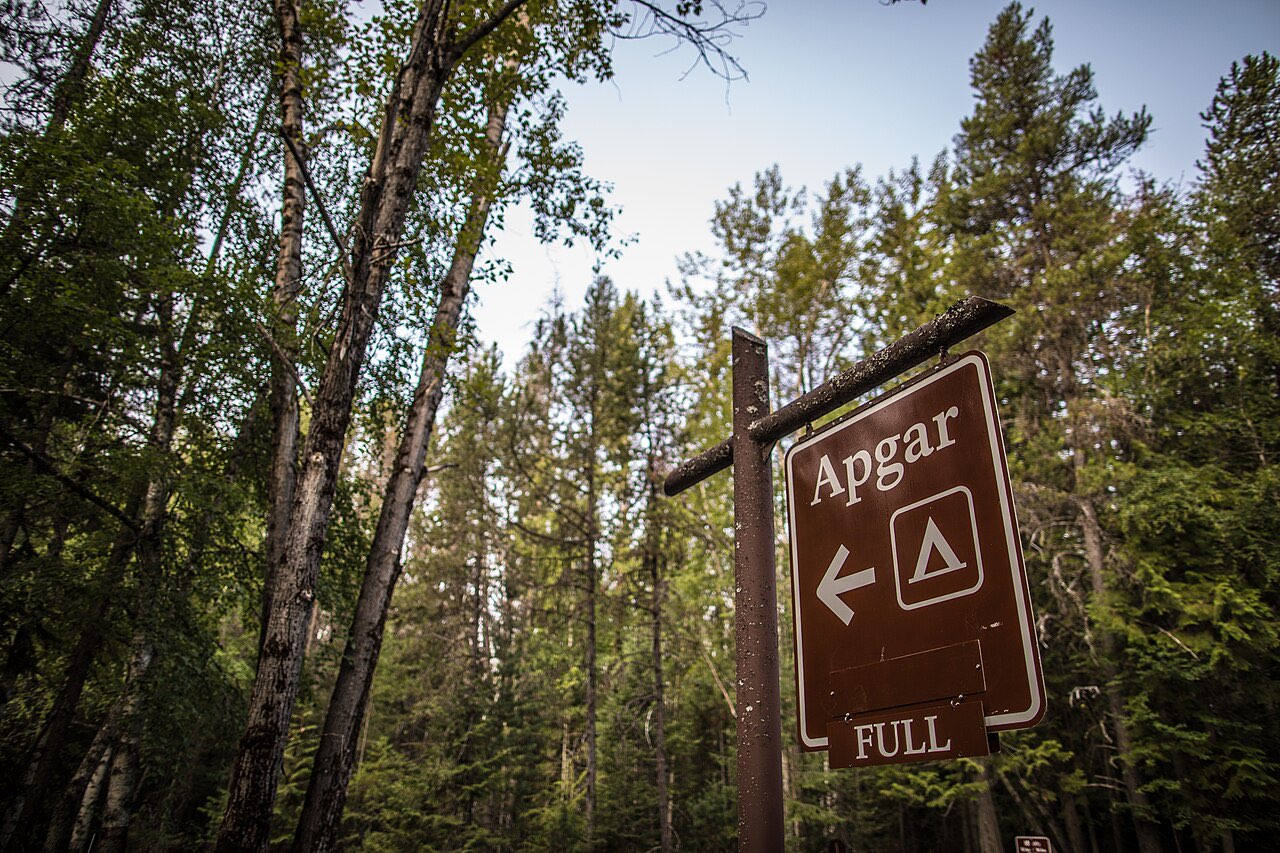
Booking a site
Eight of the 13 front-country campgrounds are reservation-only on Recreation.gov. The park’s wording is that most sites have a six-month booking window and “a good handful” have a four-day window, so there are two chances at each campground: the morning six months before your date, and again four days out when the short-window sites release. St. Mary switches to a day-of window from August 17 to September 11. The NPS warns that cell service inside the park is unreliable, so make the four-day and day-of bookings from West Glacier or St. Mary village, not from a campsite. Our Recreation.gov guide for RVers covers the length filter, which matters more here than almost anywhere, because a “35-foot” campground has a dozen such sites among a hundred shorter ones.
The park entrance fee is $35 per vehicle for seven days and the America the Beautiful pass covers it; the pass does not cover the $1 shuttle ticket fee.
A plan that works for a big rig
- Camp west at Apgar or Fish Creek for two or three nights. Both have dump stations and sit at the foot of Lake McDonald, with the Apgar shuttle stop a short walk or bike ride away. Drive your tow vehicle, or ride the shuttle, up to Logan Pass; if you drive, be back under the three-hour limit.
- Move the rig around the south of the park on US-2 to the east side, 1.5 to 2 hours West Glacier to St. Mary via East Glacier. No size restriction.
- Camp east at St. Mary (40- and 35-foot sites, dump station, the east-side shuttle stop) and day-trip to Many Glacier and Two Medicine in the tow vehicle. If your rig is 35 feet or under and you want to wake up at Many Glacier, book one of its 13 larger sites the morning the window opens and read the pad length twice.
With a van under the limit, the plan simplifies: camp at Avalanche or Rising Sun and drive the road early, before the Logan Pass lot fills, with a shuttle ticket as insurance.
Mistakes to avoid
- Treating 21 feet as the length of the trailer. It is the length of the whole combination, bumper to bumper.
- Assuming the road is open in June. It opened June 22 in 2026 and has opened in July in heavy snow years. Book campsites for the second half of July onward if driving the pass is the point of the trip.
- Booking Many Glacier on the NPS 35-foot figure without reading the site. Recreation.gov describes most pads as too small for a towed unit over 21 feet. The 13 larger sites exist; the other 90-odd do not fit you.
- Planning generator time at Sprague Creek or Cut Bank, or in the no-generator loops at Fish Creek, St. Mary, Many Glacier, Two Medicine and Rising Sun. The allowed windows elsewhere total six hours a day; the sister site’s boondocking primer is relevant here even though you are in a campground.
- Arriving on the east side with full tanks and no plan. St. Mary, Many Glacier and Rising Sun have dump stations; Two Medicine, Sprague Creek and Avalanche are not listed as having one.
- Parking a van at Logan Pass for a Highline Trail day. Three hours, enforced around the clock, in 2026. Take the shuttle for long hikes.
When to go and how long
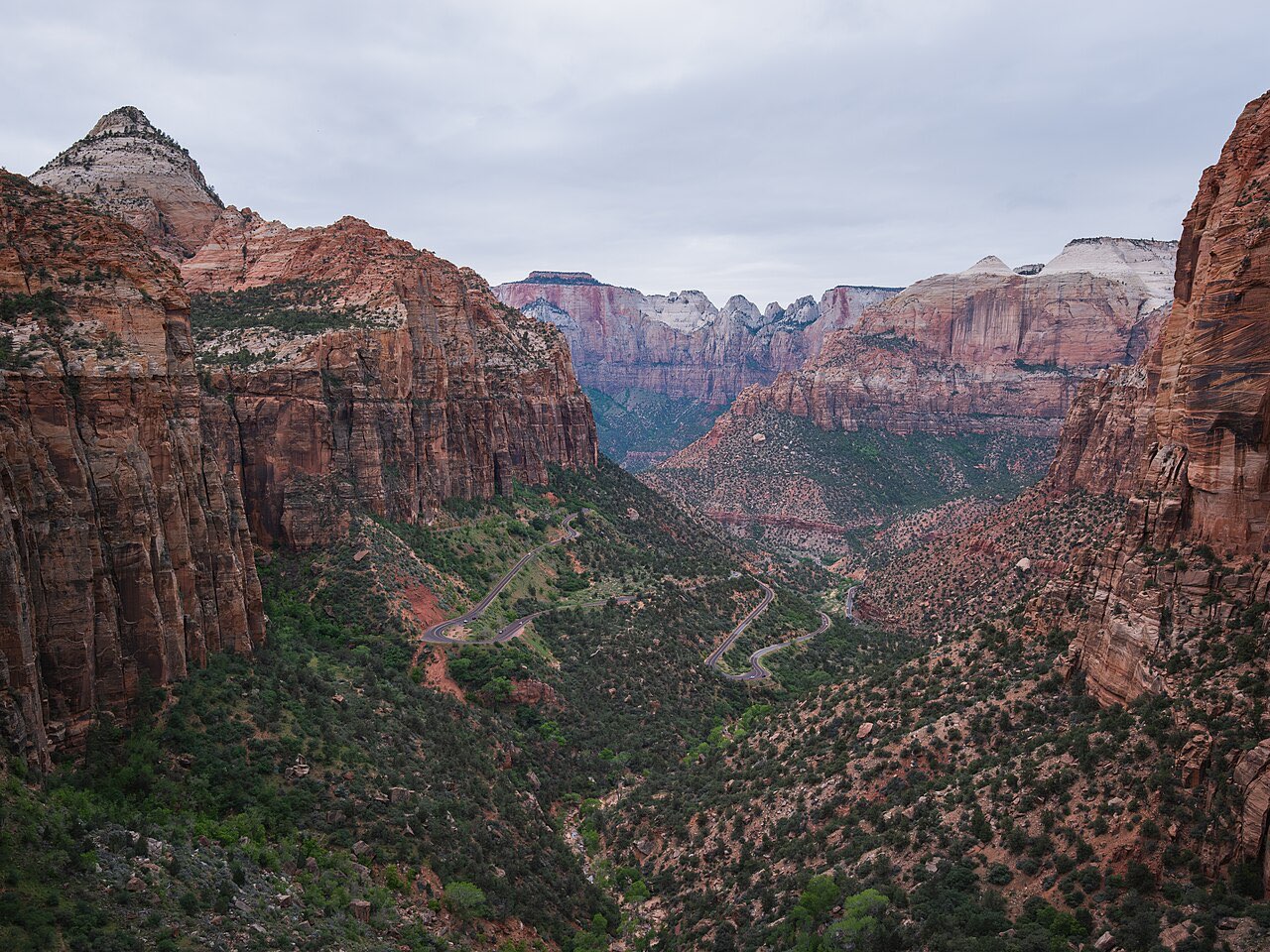
The alpine road is reliably open from early July to late September, and the third Monday of October is the typical end. July has the wildflowers and the worst parking; September has cooler nights, fewer people and the first snow on the pass by month’s end. Four nights, two per side, is the minimum to see Lake McDonald, Logan Pass, Many Glacier and Two Medicine without a five-hour day in the tow vehicle. For how Glacier’s rule compares with Zion’s new 35 ft 9 in limit and Yosemite’s tunnel heights, see the Zion RV size limits guide and our national park RV size limits roundup.
Frequently asked questions
What is the vehicle size limit on Going-to-the-Sun Road?
The National Park Service prohibits vehicles and vehicle combinations longer than 21 feet, including bumpers, or wider than 8 feet, including mirrors, between Avalanche Creek on the west side and Rising Sun on the east side. The posted limits are 21 feet long, 8 feet wide and 10 feet tall. The height figure is an advisory: the NPS says vehicles over 10 feet may have difficulty driving west from Logan Pass to The Loop because of rock overhangs. The limits apply only to the alpine section; the lower stretches from West Glacier to Avalanche and from St. Mary to Rising Sun are open to any legal vehicle.
Can an RV drive to Logan Pass?
Only if it is 21 feet or shorter and 8 feet or narrower including mirrors, which rules out almost every motorhome and travel trailer. A Class B van under 21 feet with narrow mirrors qualifies; most are 8 feet or more with mirrors. In 2026 the park also limited private vehicle parking at Logan Pass to three hours from July 1 to September 7 and ran a ticket-only shuttle from Apgar, Lake McDonald Lodge, St. Mary and Rising Sun, with tickets sold on Recreation.gov for a $1 processing fee. For most RVers the shuttle, a tow vehicle or a rental car is the way over the pass.
Which Glacier campgrounds can take a big RV?
Apgar has 25 sites up to 40 feet and St. Mary has three sites up to 40 feet plus 22 up to 35 feet, per the NPS camping information page. Fish Creek has 18 sites up to 35 feet and 62 up to 27 feet. Many Glacier has 13 sites up to 35 feet, though Recreation.gov warns most pads will not take a towed unit over 21 feet. Two Medicine has 10 sites up to 35 feet. Avalanche has 50 sites up to 26 feet. Rising Sun, Sprague Creek and all the first-come, first-served campgrounds bar anything over 21 feet. No Glacier campground has hookups.
Do you need a vehicle reservation for Glacier in 2026?
No. The NPS states that vehicle reservations are not required anywhere in the park in 2026. In their place the park piloted three-hour timed parking at Logan Pass and the ticketed Logan Pass shuttle from July 1 to September 7, 2026. Arrangements for 2027 had not been announced as of October 2026, so check the park's vehicle reservations page before you plan.
When is Going-to-the-Sun Road open to Logan Pass?
There is no fixed date. The NPS says the alpine section typically opens fully by early July and stays open until the third Monday of October, weather permitting; the lower sections are open year-round. In 2026 the road opened end to end on June 22. Plowing progress is posted on the park's road status page each spring.
Are there dump stations in Glacier National Park?
Yes, at the larger campgrounds. Recreation.gov lists dump stations at Apgar, Fish Creek, St. Mary, Many Glacier and Rising Sun. There are no electric, water or sewer hookups at any campsite in the park; shared water spigots and flush toilets are seasonal. Generators are allowed only from 8 to 10 am, noon to 2 pm and 5 to 7 pm, and are banned entirely in some loops.
Keep planning
- Zion RV Rules 2026: Size Limits and the Mt. Carmel Route
Zion RV size limits since June 2026: 35 ft 9 in single, 50 ft combined, 7 ft 10 in wide, 11 ft 4 in tall on the Mt. Carmel Highway, plus campground fit and detours.
Updated Oct 2026 - Acadia RV Camping Including Schoodic Woods
Acadia RV camping: Blackwoods and Seawall's 35-foot sites, Schoodic Woods' electric loop for rigs to 70 feet, Park Loop Road bridge heights and the Cadillac rule.
Updated Oct 2026 - Arches and Moab RV Camping: Where Rigs Actually Fit
Arches and Moab RV camping: Devils Garden's per-site limits up to 40 feet, no timed entry in 2026, $20 BLM campgrounds, Dead Horse Point hookups and where to dump.
Updated Oct 2026