Zion RV Rules 2026: Size Limits and the Mt. Carmel Route
In this guide
Since June 7, 2026, the rule at Zion is simple and strict: if your rig is longer than 35 ft 9 in as a single vehicle, longer than 50 ft as a combination, wider than 7 ft 10 in, taller than 11 ft 4 in, or heavier than 50,000 lb, you may not drive the Zion-Mt. Carmel Highway between Canyon Junction and the East Entrance. There is no longer a paid escort through the tunnel. You either fit, or you go around.
That one change rewrites the classic Zion-to-Bryce drive for most Class A motorhomes and many fifth-wheel combinations. The good news is that the rest of the park is unaffected: an oversize RV can still enter from Springdale through the South Entrance, camp at Watchman or South Campground, park in the large-vehicle lot, and ride the shuttle up the canyon. This guide lays out the exact limits, how to measure your rig against them, what you can still do with a big rig, how the campgrounds fit, and the detours the NPS itself recommends. Every number comes from the NPS large-vehicles page, the January 2026 news release, or Recreation.gov, read in October 2026. Confirm on those pages before you drive; the park has been updating them through the year.
The limits, exactly as the NPS states them
| Measurement | Single vehicle (motorhome, truck alone, towed car alone) | Combination (truck + trailer, motorhome + toad) |
|---|---|---|
| Length | 35 ft 9 in (10.9 m) | 50 ft 0 in (15.24 m) total, and the trailer no more than 26 ft (7.92 m) from hitch to rear axle |
| Width | 7 ft 10 in (2.39 m) | 7 ft 10 in |
| Height | 11 ft 4 in (3.45 m) | 11 ft 4 in |
| Weight | 50,000 lb (22,680 kg) | 50,000 lb |
Three details matter more than the headline figures.
Measurements include everything attached. The NPS says mirrors, tires, and attachments such as air-conditioning units, bike racks and satellite dishes all count. A motorhome with a body width of 96 inches (8 ft) is already over the 7 ft 10 in limit before you add mirrors. Most Class A and Class C coaches, and most fifth wheels and larger travel trailers, are built at 96 to 102 inches wide. That means the width rule, not the length rule, is what excludes most RVs, including short ones.
Height is measured to the top of the tallest thing on the roof. A 10 ft 6 in travel trailer with a 13-inch rooftop AC unit is 11 ft 7 in. Over.
Exceeding any single limit is enough. A 30-foot Class C that is 8 ft 4 in wide with mirrors is prohibited, even though it is well under the length cap.
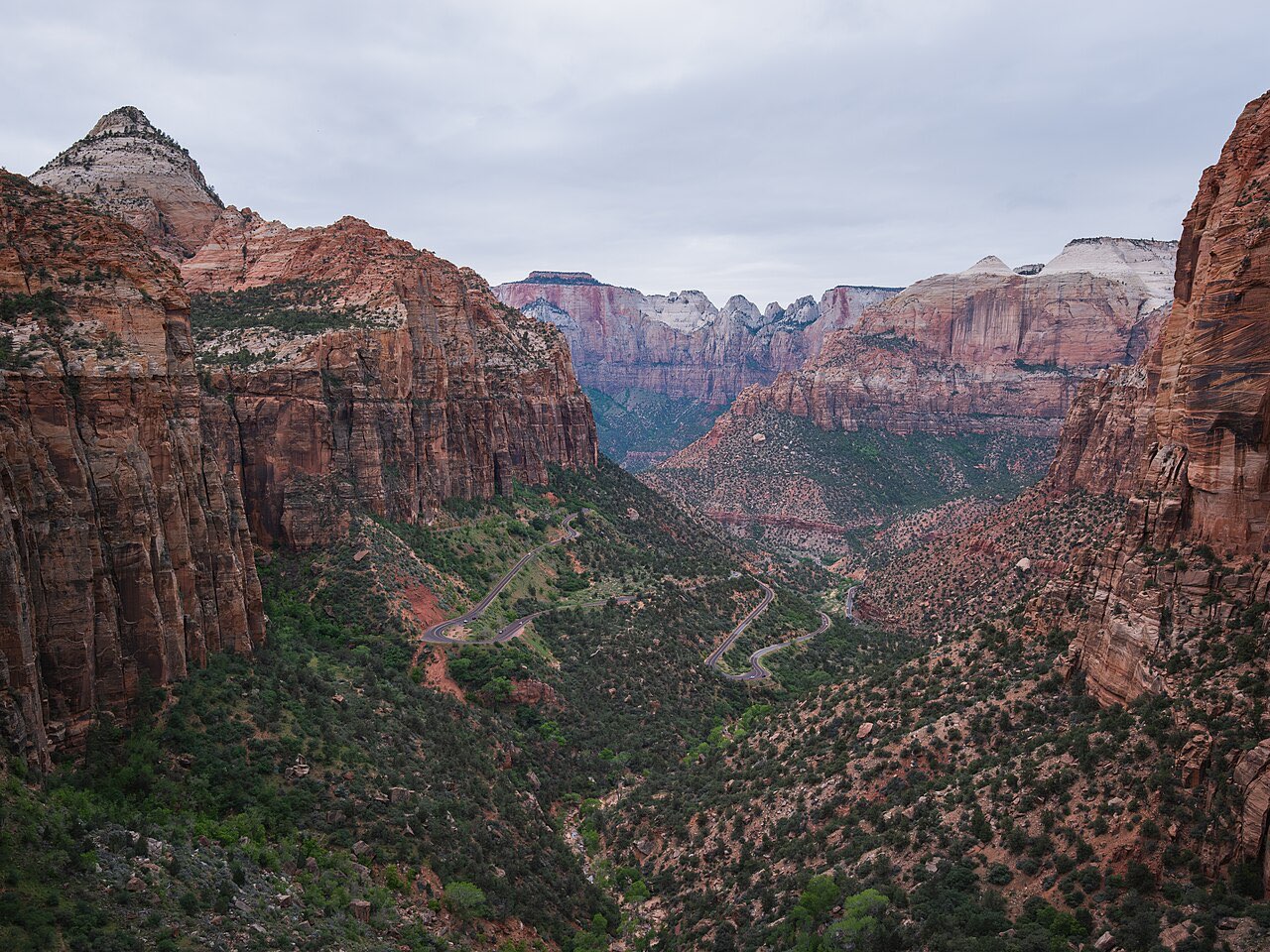
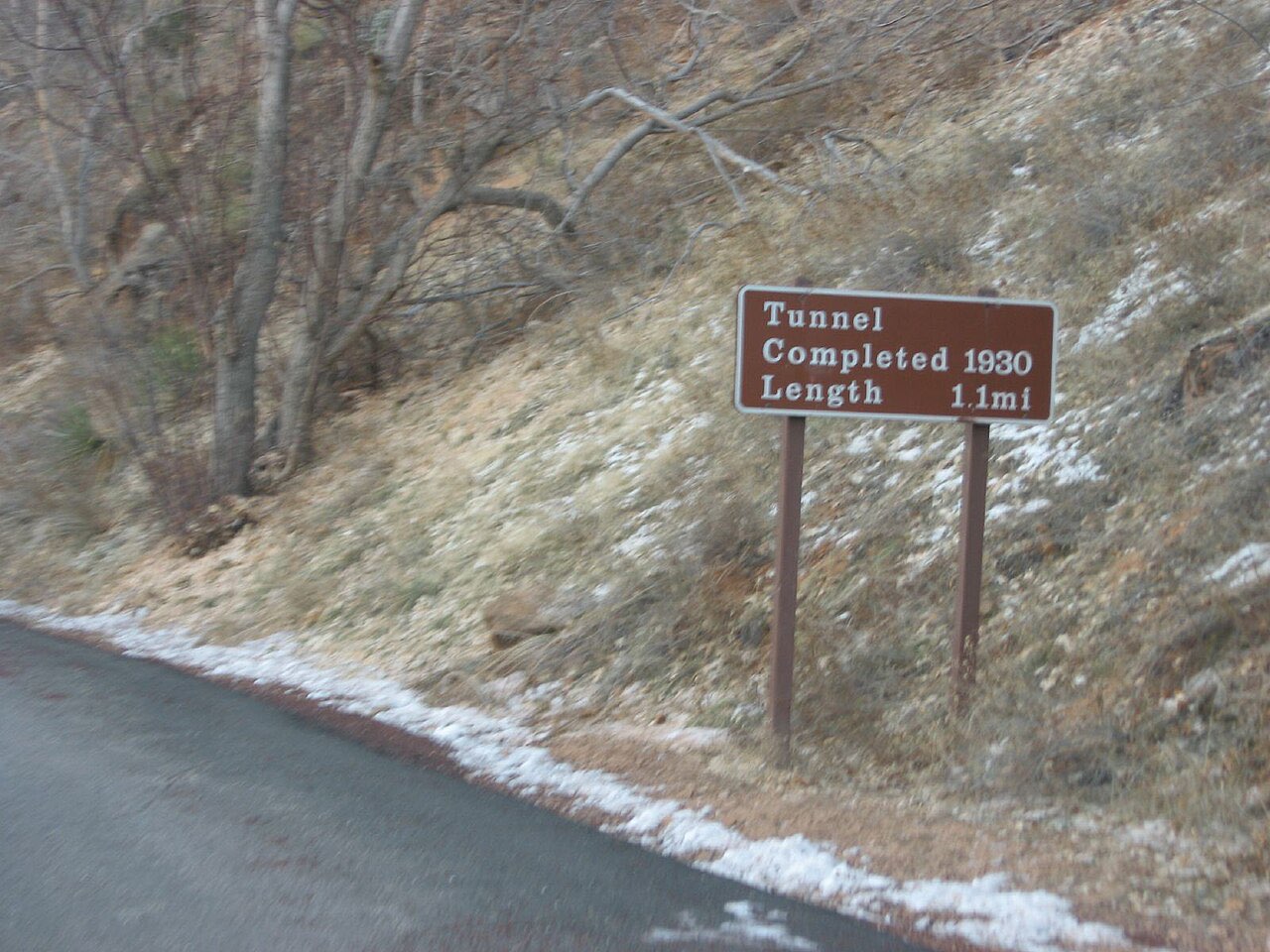
The segment covered is the full 10.7-mile stretch from Canyon Junction (where the highway leaves the canyon floor and starts the switchbacks) to the East Entrance. It is not only the 1.1-mile tunnel. The NPS says the limits exist because its 1989 and 2019 safety studies, validated by the Federal Highway Administration, found that over-length vehicles cannot stay in their lane on the curves, over-width and over-height vehicles cannot pass through the tunnel in a single lane, and vehicles over 50,000 lb exceed the rating of four historic bridges on the route.
What changed in June 2026, and what ended
For decades Zion ran a tunnel-permit system. Any vehicle 7 ft 10 in wide or 11 ft 4 in tall, including mirrors, paid a $15 permit on top of the entrance fee and was escorted through the tunnel while rangers held traffic so the big vehicle could drive down the centre line. One permit covered two trips within seven days, and escorts ran only during posted daytime hours. Vehicles over 13 ft 1 in tall, single vehicles over 40 ft, combinations over 50 ft, and anything over 50,000 lb were never allowed.
The January 5, 2026 news release announced that from June 7, 2026 the park would enforce the size and weight limits on the whole Canyon Junction to East Entrance segment. A 2016 study of the permit system had found an average of only 19 minutes of free-flowing traffic per hour through the tunnel, and just eight minutes on the busiest day. Superintendent Jeff Bradybaugh was quoted saying many of today’s large touring vehicles and RVs could not have been envisioned when the road was built.
As of October 2026 the current NPS large-vehicles page describes no permit, no escort and no exception by size class. Vehicles arriving at the South or East Entrance that exceed a limit are given instructions to turn around. RV LIFE and other RV outlets reported the permit option as eliminated on June 7. We could not find any NPS text saying an escort survives for some intermediate size, so treat the escort as gone and confirm on the park page if your rig sits just over one of the thresholds.
How to know whether you fit
Do not rely on the brochure. Measure.
- Length: tape from the front bumper to the rearmost point, including a bike rack, spare tire carrier or hitch-mounted cargo box. For a combination, measure the whole thing hitched and straight, plus the trailer from the hitch ball to the centre of its rear axle (the 26-foot rule). Many 30-foot travel trailers are 26 feet or less from hitch to rear axle; many 33-foot and longer trailers are not.
- Width: mirror tip to mirror tip, and check your awning arms and slide-out covers.
- Height: to the top of the AC shroud, satellite dome or solar panel, whichever is highest, with the rig at normal ride height.
- Weight: the 50,000 lb cap is a bridge rating and almost no private RV approaches it, but if you tow heavy, know your actual loaded weight. A CAT scale weigh costs a few dollars and settles the question.
Typical outcomes, based on manufacturer specifications rather than any park ruling:
| Rig | Usually fits? | Why |
|---|---|---|
| Class B van, 19-24 ft, under 7 ft 10 in with mirrors folded or narrow mirrors | Often yes | Check mirror width and roof AC height |
| Truck camper on a pickup | Usually yes on length; check width and height | Camper overhangs and roof AC often push height past 11 ft 4 in |
| Class C, 24-32 ft | Usually no | Most are 8 ft or wider plus mirrors |
| Class A, any length | No | Width 8 ft 6 in; height 12-13 ft |
| Travel trailer 18-25 ft behind a half-ton | Sometimes | Many are 8 ft wide; check mirror-to-mirror on the truck too |
| Fifth wheel | No | Width, height and hitch-to-axle length all tend to exceed |
The width line is where most hopes die. If your rig is 8 ft wide at the body, you are over, regardless of how short it is.
What an oversize rig can still do at Zion
The limits apply to one road. The NPS lists four things an over-limit vehicle entering through the South Entrance may still do:
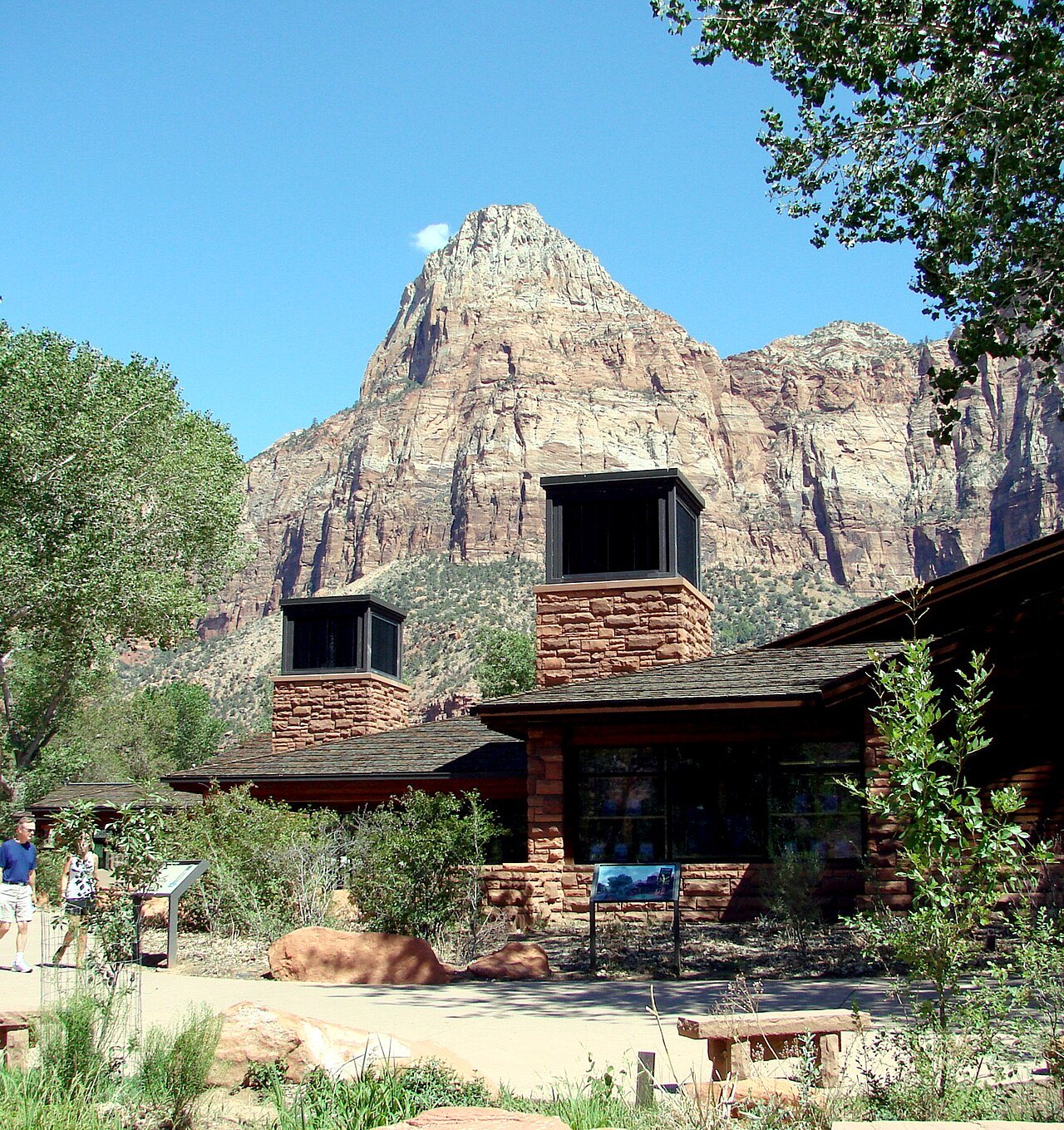
- Park in the large-vehicle lot next to the Zion Canyon Visitor Center, if there is room. The NPS does not publish a space count, and the lot fills early in spring and fall. Arrive before 9 am or expect to park in Springdale and ride the free town shuttle in.
- Drive to Zion Lodge with a valid lodge reservation, even during shuttle season.
- Drive the Zion Canyon Scenic Drive during the shuttle off-season, when the canyon road is open to private vehicles. In most years that means December through February, with a holiday-week shuttle exception; the park publishes the schedule on its shuttle page.
- Camp at Watchman or South Campground.
Everything on the canyon floor, from the Visitor Center to the Temple of Sinawava, is reachable by shuttle, so a big-rig visit loses nothing except the drive over the tunnel to the east side and the Canyon Overlook trailhead.
The two campgrounds, and how RVs fit
Both campgrounds sit just inside the South Entrance, a short walk from the Visitor Center and the shuttle. Neither has a published campground-wide maximum length; fit is set loop by loop and site by site on Recreation.gov.
| Watchman Campground | South Campground | |
|---|---|---|
| Season | Year-round | Early March to end of October |
| Reservations | Recreation.gov, 6 months ahead | Recreation.gov, 14 days ahead |
| Hookups | Electric in A and B loops, mostly 30 amp, a handful 50 amp; no water or sewer at sites | None |
| Length rules | C, D (non-electric) and F (tent) loops: no vehicles 19 ft and over, including combined length | No published limit; check each site’s listed pad length |
| Dump station | Yes, with potable water, at the entrance | Yes |
| Generators | Not allowed | 8-10 am and 6-8 pm only |
| Toilets | Flush | Flush |
Source: Recreation.gov facility listings for Watchman and South Campground, October 2026.
Practical reading of that table: a motorhome or trailer belongs in Watchman’s A or B loop, where the electric sites are, and those are the sites that disappear the morning the six-month window opens. Our Recreation.gov reservations guide covers the timing. The electric sites are mostly 30 amp, so run one air conditioner, not two; see the sister-site explainer on 30-amp versus 50-amp service if you are unsure what your rig draws. Watchman’s generator ban means a non-electric site is a no-power site.
Fees. Recreation.gov listed Watchman group sites at $50, $90 and $130 per night in October 2026 but did not expose individual-site rates in the listing text. Third-party reports put Watchman electric sites at about $45 and non-electric sites at Watchman and South at about $35 per night after a mid-2026 increase; we could not confirm those figures on an NPS page, so check the price shown at checkout. Senior and Access lifetime pass holders get 50 percent off one individual site. Changes cost $10, and cancelling within two nights of arrival forfeits the first night.
South Campground is the fallback when Watchman is full, but its 14-day window makes it hard to plan around, and with no hookups and tight generator hours it suits smaller, self-contained rigs best.
Getting around the tunnel
If you are over the limit and heading east, or arriving from the east, you have two paved options. The NPS gives distances for the Bryce Canyon and North Rim cases on its large-vehicles page.
| Route | Roads | Distance and time (NPS figures) | Compared with the park route |
|---|---|---|---|
| North, to Bryce Canyon | I-15 north from the Hurricane/St. George area to Highway 20, then US-89 south | About 150 miles, 2.5 hours | 63 miles longer, about 42 minutes more |
| South, to Grand Canyon North Rim | SR-59 southeast from Hurricane to Arizona SR-389, then US-89A to Jacob Lake | About 128 miles, just over 3 hours | 23 miles longer, about 10 minutes more |
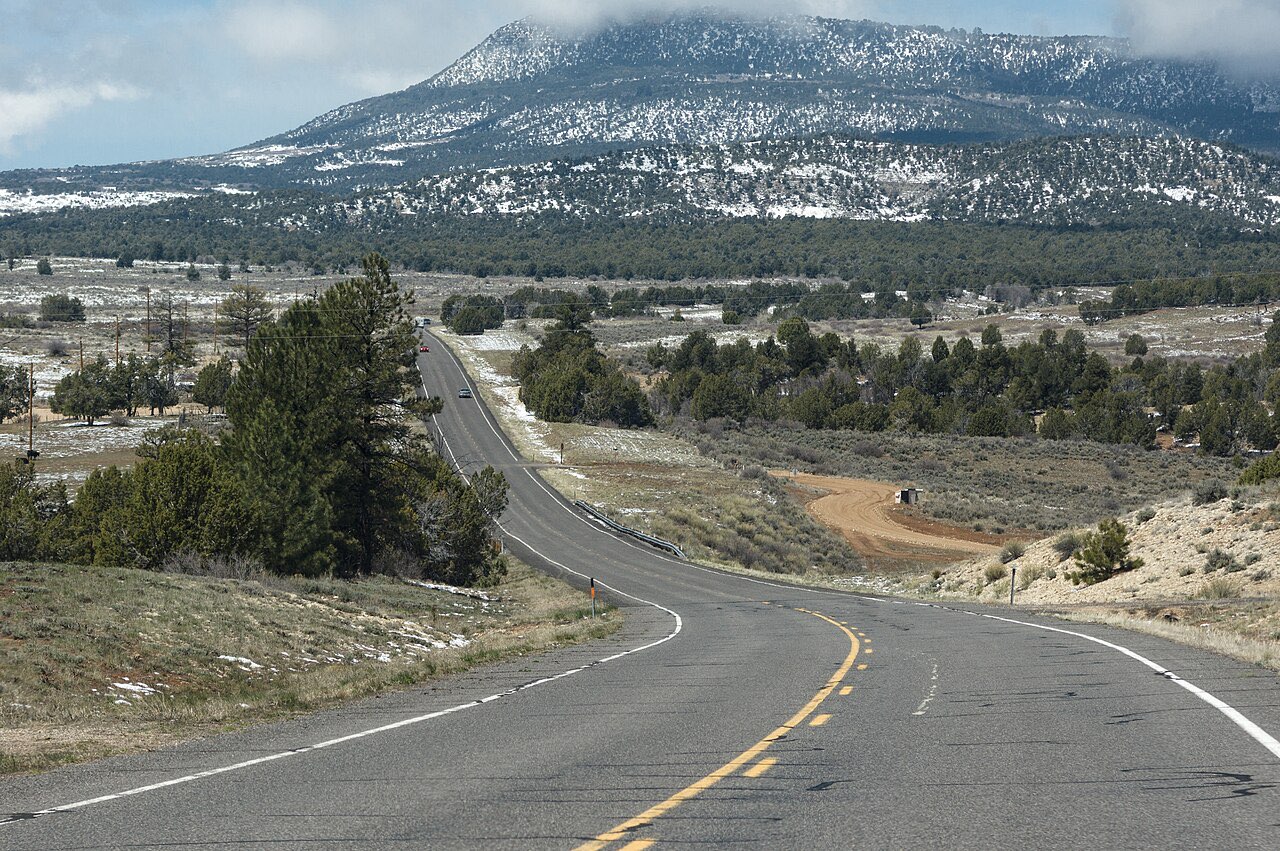
Both detours also work for reaching US-89 at Mt. Carmel Junction or Kanab if you are simply continuing east. RV LIFE’s write-up of the change gives the southern loop (SR-59, AZ-389, US-89) as roughly 80 miles and 1.5 to 2 hours to the east side of SR-9, and warns against SR-14 and SR-143 over Cedar Mountain for heavy rigs because of grade, and against the unpaved Sheep Bridge and Smithsonian Butte roads that mapping apps sometimes suggest. Treat those as sensible cautions rather than official rules.
Whichever way you go, remember the entrance fee. The NPS states that Zion is a fee area and that passing through on the highway still requires the $35 vehicle fee or a pass. The America the Beautiful pass covers it, and if Bryce Canyon is next on the route the pass pays for itself within two parks. Our Bryce Canyon RV guide picks up where this one leaves off.
Mistakes that cost people a day
- Arriving at the East Entrance in an over-limit rig. You will be turned around, and the nearest place to turn a 40-foot combination is not always at the gate. Decide your route before Mt. Carmel Junction.
- Assuming a campground reservation is a tunnel pass. It is not. Watchman and South are reached from the South Entrance only.
- Folding the mirrors to make 7 ft 10 in. The NPS measures with mirrors, and nothing on its page suggests folding them is accepted. Do not plan around it.
- Trusting the shuttle calendar from last year. Scenic Drive access for the lodge-reservation and off-season exceptions depends on the shuttle schedule, which shifts annually.
- Forgetting that a towed car counts. A 34-foot motorhome flat-towing a 15-foot car is a 49-foot combination before you measure the tow bar. The 50-foot cap applies to the whole thing.
When to go and how long to stay
Spring and fall are the busy seasons, and they are also when the large-vehicle lot fills first. In summer the canyon is hot and the lot still fills; in winter the shuttle stops, the Scenic Drive opens to private vehicles including oversize ones, and Watchman stays open year-round with electric sites that make a cold night comfortable. Two nights at Watchman covers the canyon shuttle stops and one long hike. If you want the east side, Canyon Overlook and the slickrock country beyond the tunnel, plan it as a day trip in your tow vehicle or toad, or accept the detour and camp near Kanab or Bryce.
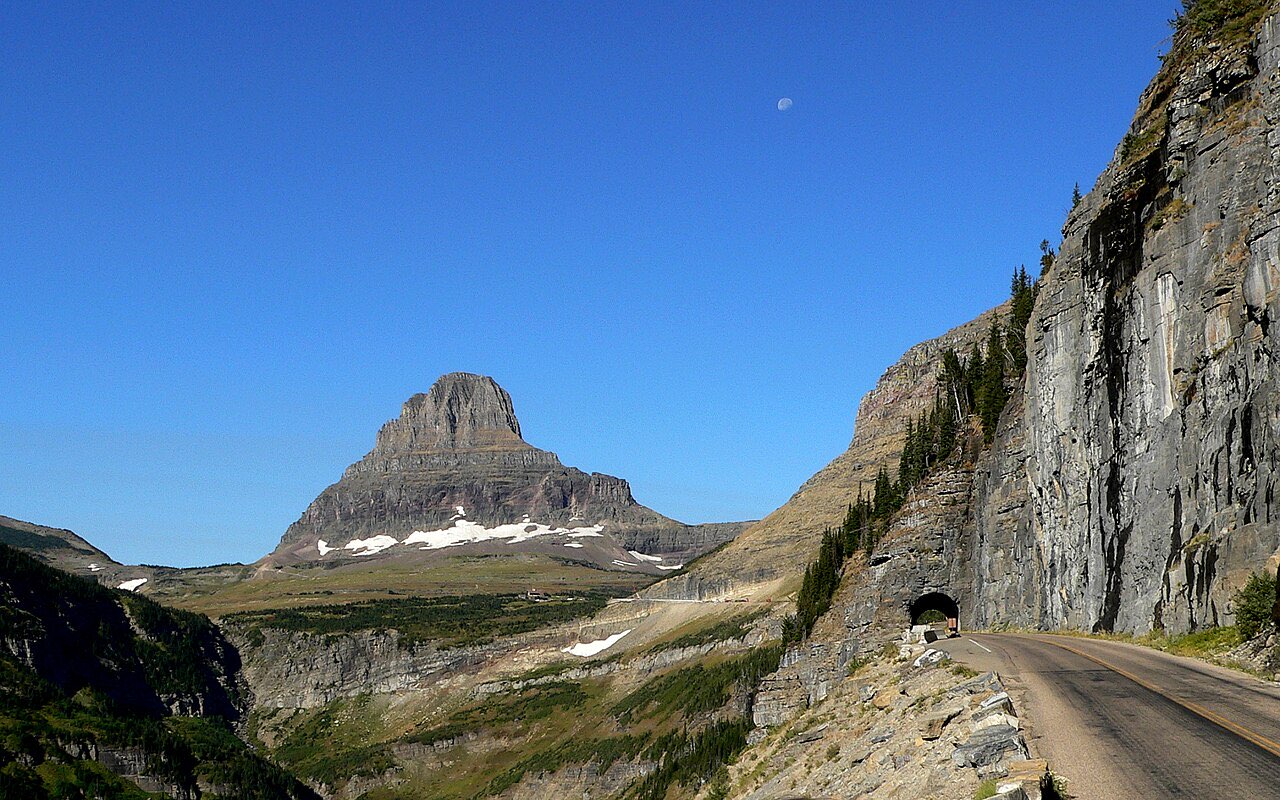
For how these limits compare with the other restricted roads in the system, from Glacier’s 21-foot Going-to-the-Sun rule to Yosemite’s tunnel heights, see our national park RV size limits roundup and the Glacier Going-to-the-Sun guide.
Frequently asked questions
What is the RV length limit at Zion National Park?
On the Zion-Mt. Carmel Highway between Canyon Junction and the East Entrance, the National Park Service bars any single vehicle longer than 35 feet 9 inches, wider than 7 feet 10 inches, taller than 11 feet 4 inches, or heavier than 50,000 pounds. A truck-and-trailer combination may not exceed 50 feet overall, and the trailer may not exceed 26 feet from hitch to rear axle. Measurements include mirrors, roof air conditioners, bike racks and dishes. These limits have been enforced since June 7, 2026. There is no separate length limit for entering the park through the South Entrance, as long as you stay west of Canyon Junction.
Can a big RV still get a tunnel escort through Zion?
Not as of October 2026. The old system, where vehicles over 7 feet 10 inches wide or 11 feet 4 inches tall paid a $15 permit and were escorted through the tunnel one way, was studied and found to leave only about 19 minutes of free-flowing traffic per hour. The January 2026 news release and the current NPS large-vehicle page describe no permit or escort option: a vehicle over any limit is simply not allowed between Canyon Junction and the East Entrance. Confirm on the NPS page before you go, because the rules are new and the park updates that page.
Can an oversize RV camp at Watchman or South Campground?
Yes, if you arrive through the South Entrance from Springdale. The NPS lists Watchman and South Campground among the places an over-limit vehicle can still go. A campground reservation does not entitle you to use the East Entrance or the tunnel. Note that Watchman's non-electric C and D loops and the tent-only F loop do not permit vehicles 19 feet and over, including combined length, so a large rig should book an electric site in the A or B loops.
How do you get from Zion to Bryce Canyon in an RV that is over the limit?
Drive around. The NPS gives two examples: to Bryce Canyon via Highway 20 north of Cedar City is about 150 miles and roughly 2.5 hours, which is 63 miles longer than the Mt. Carmel route but only about 42 minutes more. To the Grand Canyon North Rim via Highway 59 toward Jacob Lake is about 128 miles and a little over 3 hours, 23 miles and about 10 minutes more than the park route. Park figures say the detours add 10 to 45 minutes depending on destination.
Do you pay the Zion entrance fee if you are only driving through?
Yes. The NPS states that Zion is a fee area and the entrance fee applies even when passing through on the highway. As of October 2026 the private vehicle fee is $35 for up to seven days, the Zion annual pass is $70, and the America the Beautiful pass is $80. Non-US residents aged 16 and over pay an additional $100 per person unless admitted with an annual pass.
Does a reservation at Zion Lodge let a large vehicle use the Mt. Carmel Highway?
No. A Zion Lodge reservation is one of the South Entrance exceptions: it lets an over-limit vehicle drive up Zion Canyon Scenic Drive to the lodge during shuttle season, when private cars are otherwise banned from that road. It does not grant access past Canyon Junction toward the tunnel and the East Entrance.
Keep planning
- Glacier National Park RV Size Limits on Going-to-the-Sun Road
Glacier RV size limits: 21 ft long, 8 ft wide between Avalanche Creek and Rising Sun on Going-to-the-Sun Road, which campgrounds fit 35-40 ft rigs, Logan Pass rules.
Updated Oct 2026 - Acadia RV Camping Including Schoodic Woods
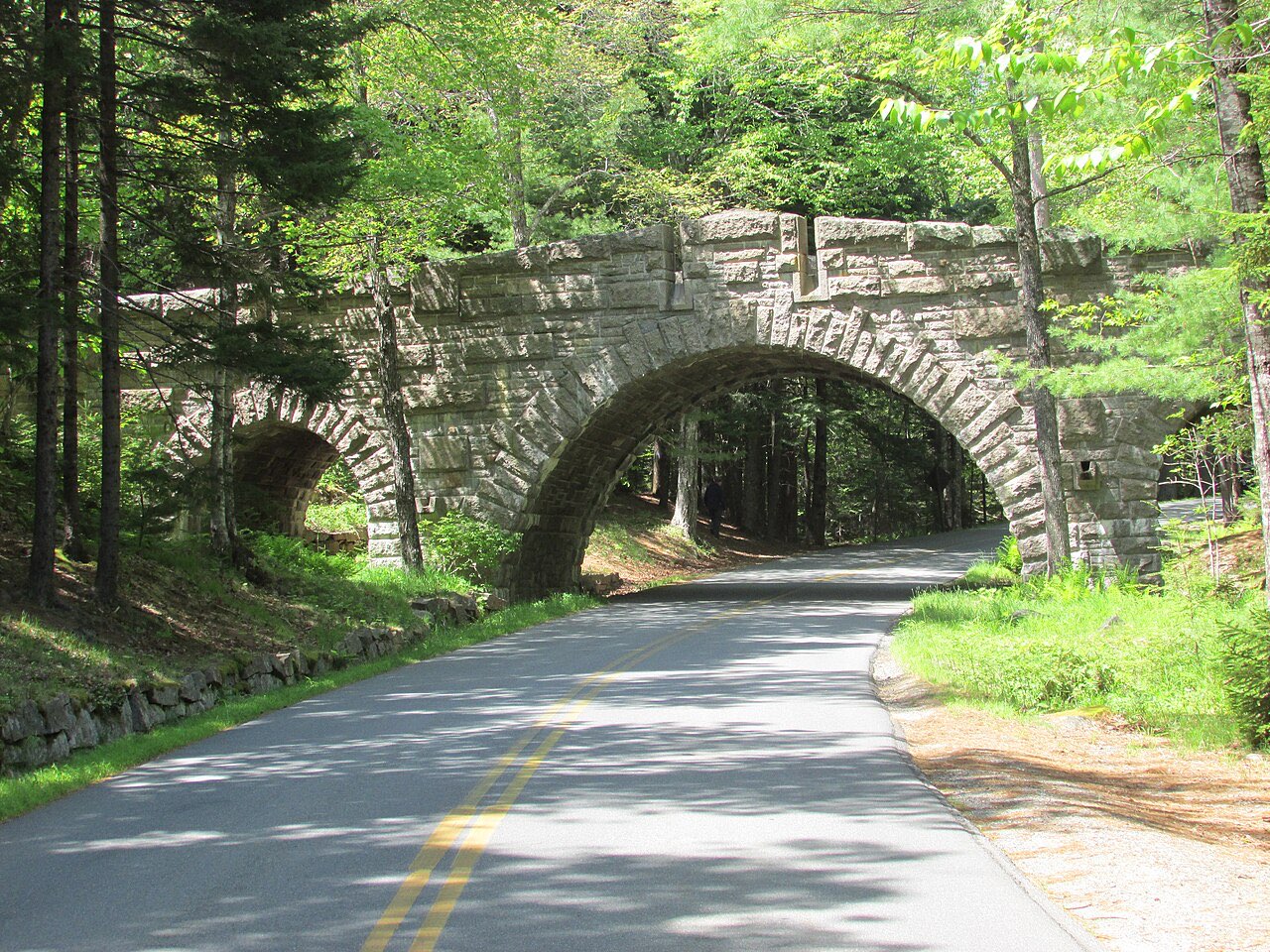
Acadia RV camping: Blackwoods and Seawall's 35-foot sites, Schoodic Woods' electric loop for rigs to 70 feet, Park Loop Road bridge heights and the Cadillac rule.
Updated Oct 2026 - Arches and Moab RV Camping: Where Rigs Actually Fit
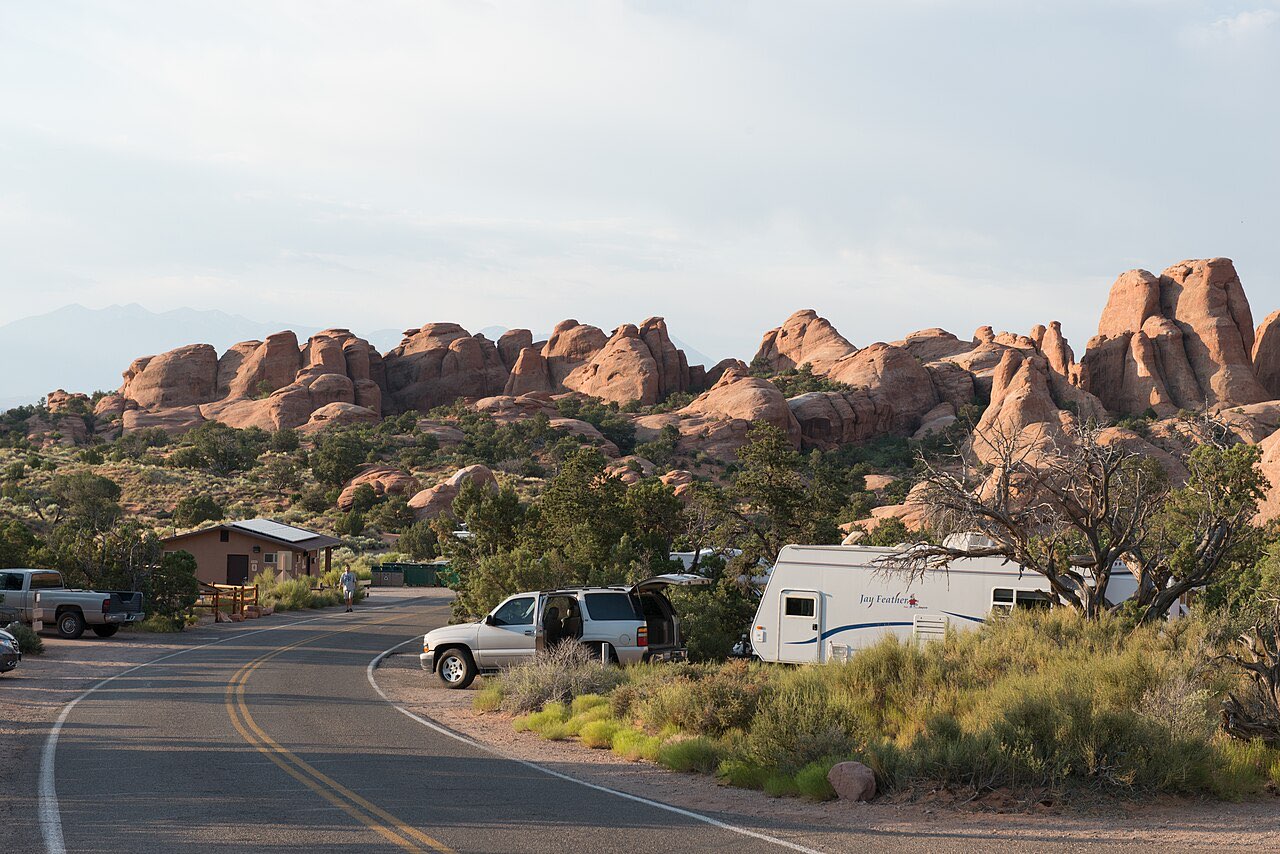
Arches and Moab RV camping: Devils Garden's per-site limits up to 40 feet, no timed entry in 2026, $20 BLM campgrounds, Dead Horse Point hookups and where to dump.
Updated Oct 2026